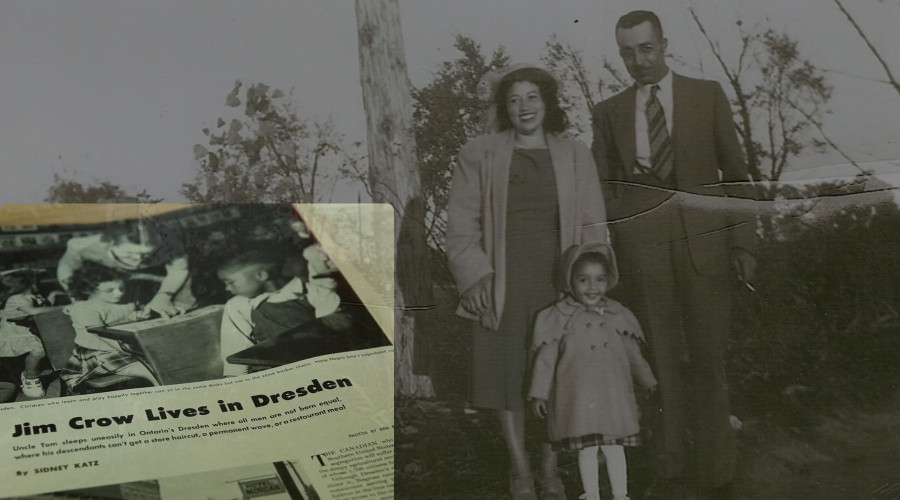
Hugh Burnett was 25 years old when he returned from active military service in 1943. Still in uniform, he walked into a restaurant in Dresden, Ontario, and was refused service.
Dresden’s claim to fame was that it was a key stop on the Underground Railroad and also home to Josiah Henson, a former U.S. slave whose story inspired the classic novel Uncle Tom’s Cabin.
But Hugh Burnett, an African Canadian, Second World War veteran, carpenter, and father, was about to learn what racism looked like when it took off its polite mask.
After being refused service, Burnett wrote to the federal Justice Minister Louis St. Laurent, certain this had to be illegal. The reply shocked him: racial discrimination was perfectly legal in Canada. Property owners could refuse service to anyone they wanted. It was called "freedom of commerce."
Meanwhile, Canadians were reading news from the United States with sympathy, shaking their heads at American racism. The irony wasn't lost on Burnett. In Dresden, the same town that had been a beacon of hope during the Underground Railroad, where thousands of formerly enslaved African Americans found refuge, the descendants of those freedom seekers couldn't get a haircut or a meal.
"Burnett's activism was radical and useful because he made Canadians face the hypocrisy of life for Blacks in Canada," explains Christopher Dummitt, a Canadian history professor at Trent University. "The difference between what was polite to believe in Canada, that discrimination was un-Canadian, and the reality of actual discrimination was suffered by many people like himself."