 By
By The constant refrain that echoes in every space we find ourselves in. But what if working twice as hard isn't the only path forward? What if, sometimes, joy and exploration are forms of success too?
When I quit my full-time job last year and relocated to Toronto, I didn't feel like I was working twice as hard as anybody else. I eagerly traded financial stability for adventure. I was hyper aware that I was choosing a path most immigrant parents would caution against, if not forbid altogether. But I was also choosing something my grandmother's generation rarely had the luxury to choose: a life beyond survival mode.
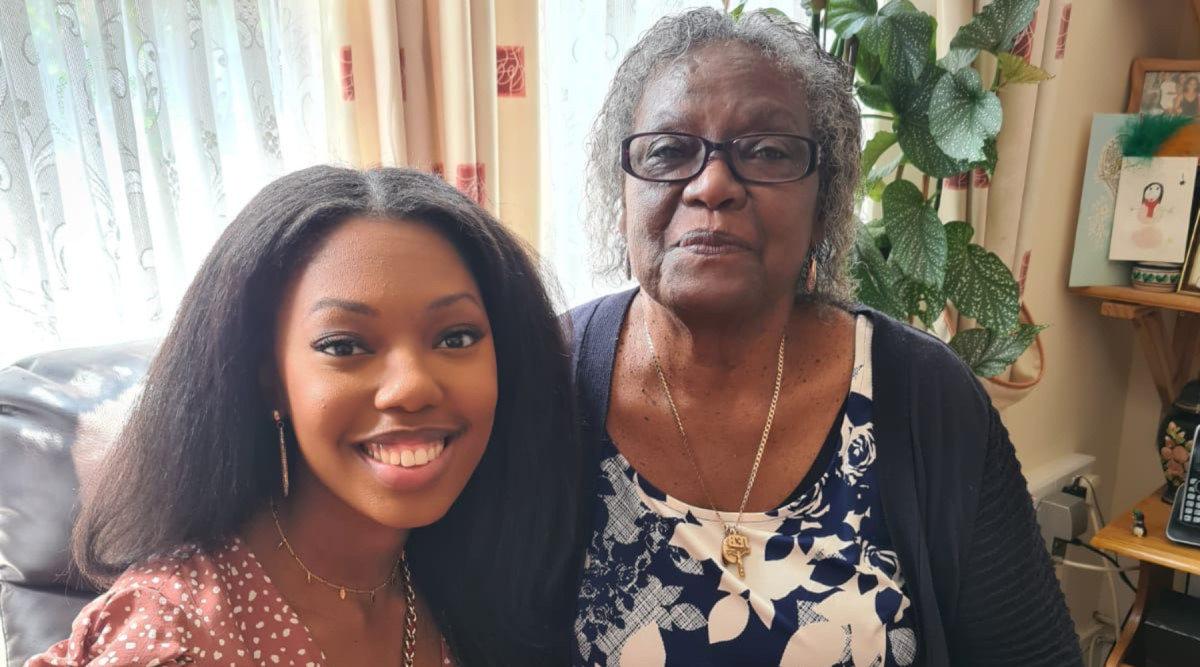
In June 1965, 60 years before I boarded a one-way flight to Toronto, my Granny boarded a steamship from the Seychelles (a small island in the Indian Ocean) to Britain. While she moved to Britain in search of economic stability, I moved to Canada in search of adventure. The difference between our journeys reveals how much has shifted—and how much further we still need to go.
Before my Granny immigrated to England, she worked as a server at a hotel in the Seychelles, catering to guests who brought traces of what life beyond the Indian Ocean could look like. These travellers came for pleasure, for exploration. My Granny would leave for survival.
When an English guest offered her a job as an au pair, she took it. "If you find the opportunity to go, you go," her parents told her. Back then, it would have been impossible for my Granny to conceive of travelling abroad for any reason other than a better life. She lived with five brothers and four sisters on a tiny, remote island that offered her little opportunity for growth.
The life that awaited her in Britain was defined by struggle, not joy. As she settled into her new home in a foreign land, she had to navigate a language barrier, loneliness, independence and brutal racism. She moved to Britain at a time when it was normal to see signs that read 'No Blacks, No Dogs, No Irish'. She faced race-based housing discrimination and violence alongside many other personal hurdles that made her path to success incredibly challenging. But leaving wasn't an option. She had to push through and make it work. So much so that she went 21 years without seeing her parents.
That's what survival mode looks like. She worked as an au pair and then spent 22 years as a curtain maker for a hotel in London. Relentlessly, she weaved a path of opportunity for future generations of our family, and that path has opened countless opportunities for me. Her sacrifice was supposed to create something different for us—a life where thriving, not just surviving, becomes possible.
By the time I was born, my Granny had carved a path that created a life of comfort for me. One where I spent numerous sunny afternoons planespotting on the balcony with my mum. Watching those planes streak through the sky on their way to and from London Heathrow, I learned there were places to go in this world, and I decided that one day I would visit them. Not because I had to, but because I could. This is the gift of moving beyond survival: the freedom to explore rather than escape.
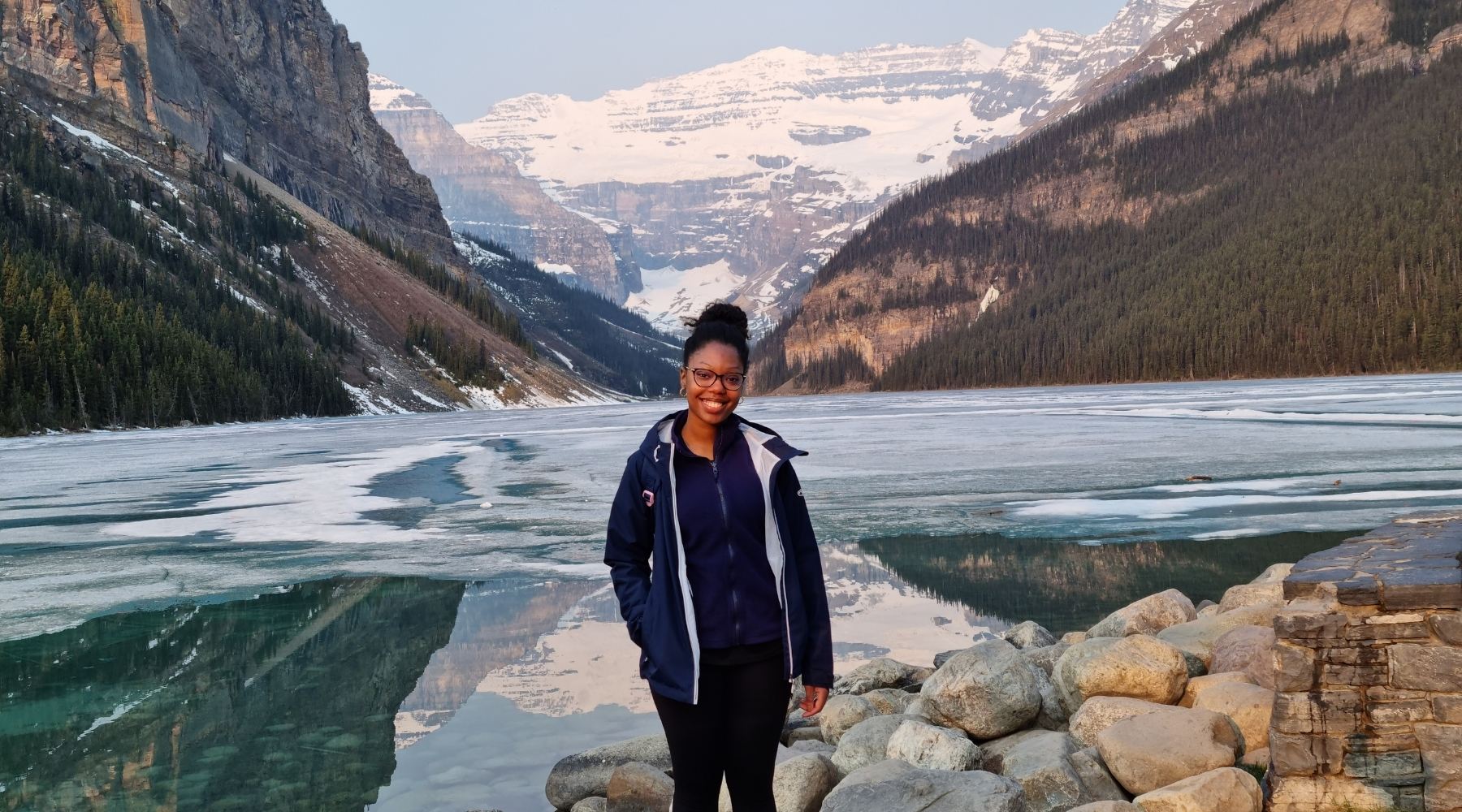
Yet even with this freedom, I found myself trapped in a different kind of survival mode. Working two jobs, neither of them offering any opportunities for progression. I felt drained. My life was operating at a frequency I no longer wanted to tune into. I realized I was replicating the very conditions of overwork my Granny had endured, except without the same necessity. So I chose to take a different path. I realized that for me, success couldn't just look like working hard, owning something, and sending money back to your family. Success had to include travel, adventure, and a career flexible enough to allow me to do both.
This redefinition of success isn't just personal—it's generational. Danica Nelson, Career Break Coach and Founder of Liberty Leave, sees this shift clearly. "For many of us, especially immigrants or children of immigrants, success has been traditionally measured by income, job titles, home ownership, and physical possessions, because those things represented safety and stability," she says. "The reality for many of us is that our definition of success has evolved. Success now includes rest, autonomy and self-exploration."
To me, this shift represents a significant evolution in Black global mobility. While the past two generations of my family have left their hometowns (in both the Seychelles and Guyana) in search of a better way to live, I'm the first to leave for exploration. This is what it looks like when survival mode begins to lift—when we can choose adventure over necessity.
Of course, this choice requires resources. I spent the majority of my savings setting up a new life for myself in Toronto, and I know this is a privilege, one that has to be attributed to the journeys of our immigrant relatives. The idea of a career pause wouldn't have been an option for my Granny.
Her journey created space for mine to evolve.
Now, success within our family can graduate to a place where gaining a broader perspective of the world is perceived as an achievement, too. As Danica notes, "Money is a powerful tool that gives us options, time, and the ability to walk away from spaces or situations that no longer serve us."
When Danica took her first career break, she was escaping the same trap I'd found myself in. "I had spent 12 years in my career climbing the corporate ladder, while juggling multiple side hustles and saying yes to every opportunity that came my way. I was exhausted," she tells me. "I needed time and space away from work to think clearly, to slow down, and to reconnect with myself outside of my productivity."
{https://www.instagram.com/p/DPCYkoEEUfR/?hl=en}
This exhaustion is the inheritance so many of us carry—the belief that constant hustle is the only way forward. Wherever we can, we have to try to orient the Black experience away from struggle and towards enjoyment.
I believe there's an enduring mentality among Black people that hard work guarantees success, despite the fact that there are hard-working people all over the world for whom success never comes. It's a myth so powerful that many of us are rarely encouraged to do anything but hustle. As Danica says, "Hustle culture is exhausting us. In many ways, it's replicating the very conditions of overwork and survival that [our immigrant parents and grandparents] were trying to protect us from in the first place. For many Black folks whose history includes enslavement, colonization, and systemic exclusion, the opportunity to live outside of survival mode is a form of liberation."
Being successful in conventional terms is still important to me. I still aspire to financial freedom and an eventual sense of stability, wherever in the world that may be. But I also feel strongly that after years of enduring, my Granny deserves to see me happy, fulfilled and thriving.
Part of our duty now is to continue making the path towards success smoother, and I think a life well lived, one that includes moments of joy, rest, and exploration, is one of the greatest gifts we can give to our immigrant parents and grandparents. After all, that's why our relatives left their homes in the first place, to make life easier for those of us who get to experience the world after them.
In our pursuit of success, we're allowed to have moments where we choose ourselves too.