 By
By I did not set out to make history. I set out to fill a gap that had always felt personal.
Last autumn, I attended a presentation by C& (Contemporary And) — an internationally renowned platform for contemporary art from Africa and its global diaspora — at an event co-organized by BAND (Black Artists' Network In Dialogue) and Gallery TPW here in Toronto.
The room was full of fascinating creative souls from all over the country, many of them in town for Art Toronto. The kind of energy you feel when a big idea meets the right moment.
C&'s Executive Director, Dr. Yvette Mutumba, was presenting the platform's vision: to create content about contemporary artists from Africa and its diasporas in non-colonial languages. For most people in that room, it was an inspiring concept.
For me, it felt like coming home.
A Language You Learn to Hide
I was born in Martinique. Antillean Creole is my mother tongue — the language of my family, my friends, my earliest memories. It is warm, percussive, intimate. It is the language in which I first understood what it meant to belong somewhere.
But Creole, for all its richness, carries a stigma. Growing up, it was understood — never explicitly stated, but deeply felt — that Creole was informal. You could speak it with friends, with family, in the street. But not with teachers. Not with authority figures. Not in any space where you needed to be taken seriously. I am trilingual: Creole, French, English. And for most of my life, I have navigated which language was acceptable in which room, with Creole quietly left at the door.
To this day, I would not open a client pitch in Creole, or address a stranger in it without knowing them first. That is slowly changing — universities are now studying and teaching it, scholars are documenting it — but the wound of its institutional invisibility runs deep for those of us who grew up speaking it.
The Long Way Around
Like many teenagers from Martinique, I left the island to study in France. Even though Martinique is technically French territory, leaving felt like emigrating. And France confirmed it. It was there, for the first time in my life, that I experienced racism — not because of how I looked, but because of how I sounded. My accent marked me. My Caribbeanness, the thing I had simply been, suddenly became something that had to be managed.
I finished my studies, began working in France, then moved to London for seven years, and eventually to Toronto where I have now lived for ten. The further I got from continental Europe, the more I could breathe.
I think about it in terms of the old world and new world. In France, the model is assimilation and you are expected to become French, fully and without remainder. In London and Toronto, something different is possible. The Caribbean community here is large, vibrant, and respected. Caribana draws people from across the United States. The Haitian community in Montreal is extraordinary in its energy and cultural production. Organisations like NIA Centre and BAND do essential work holding space for Black culture in this city. In Toronto, I do not have to leave my identity at the door. I can own it.
The proximity helps too. From the North American east coast, the Caribbean is just a short flight away, nearly in the same time zone. The connection stays alive in a way it never could from Paris.
Lost, and Found Again
For years, I worked in institutional finance. I will not dwell on those years except to say this: I was doing my best to conform. Bay Street and the City of London have a way of communicating, very clearly, who you are expected to be and how you are expected to sound — especially when you do not look or sound like everyone else. I conformed. And in conforming, I slowly lost the thread back to myself.
It took loss to find it again. Corporate struggles. Separation. The grief of losing people close to me. In the aftermath of those things, I found myself drawn back, almost involuntarily, toward culture — toward the music, the art, the language, the history of the Caribbean. It was not a career decision. It was a survival instinct. Culture became the way I reconnected to myself, to meaning, to purpose.
That is what led me to cultural strategy and art consulting. Not ambition. Healing.
When Dr. Mutumba described C&'s commitment to publishing in non-colonial languages, I did not hesitate. I approached her after the presentation with a simple proposal: let me help C& publish their first article ever in Antillean Creole.
What followed was months of quiet, collective work across the Caribbean. Drawing on my network and with the help of cultural producer Andreann Asibey, I curated a longlist of contemporary visual artists from Martinique and Guadeloupe. C& shortlisted two of them. I sourced the writer — someone capable of bringing genuine personal sensibility to the work — and found a translator who could honour not just the words, but the beauty and poetry of our Creole.
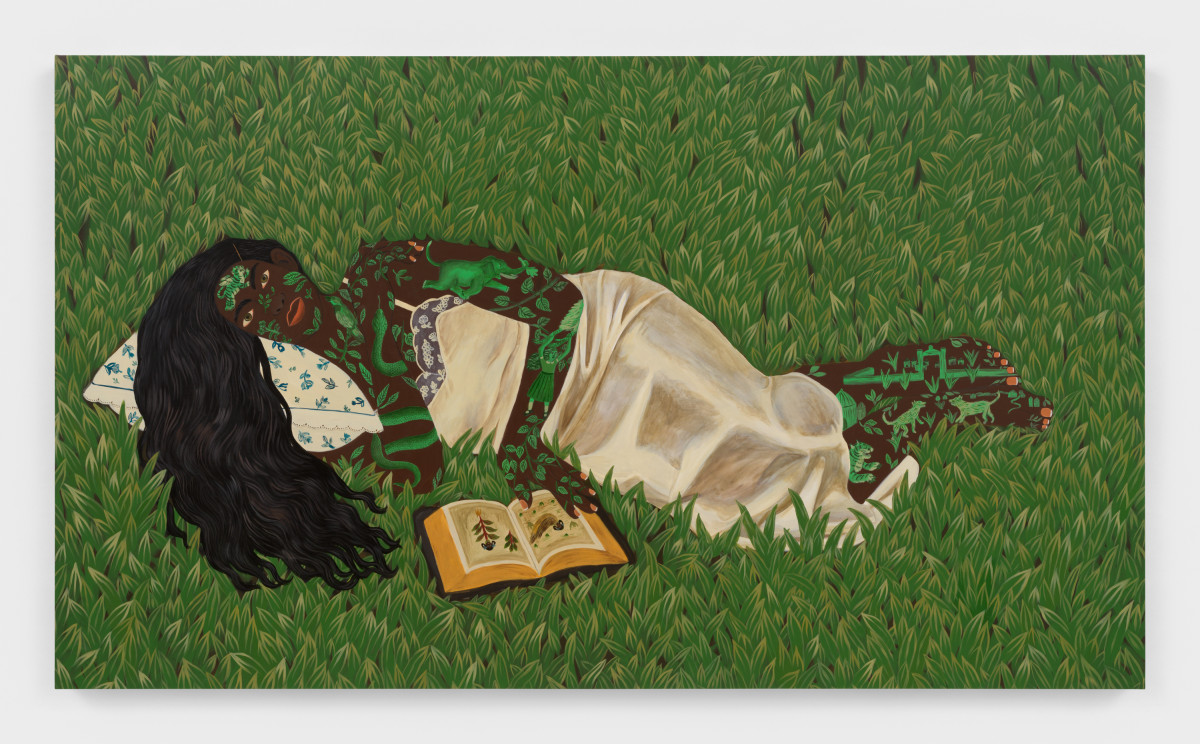
The artist we ultimately featured is Kelly Sinnapah Mary, a Guadeloupean whose work explores Indo-Caribbean identity and engages deeply with the thought of Aimé Césaire and Édouard Glissant. Her practice felt like the perfect opening chapter for this kind of linguistic first. The article is a sensitive and beautiful portrait written by Kai Trotz-Motayne and translated with care and grace by Marie-José Desnel.
Antillean Creole belongs to a family of French-lexified Creoles spoken by over 14 million people — across Martinique, Guadeloupe, Haiti, Saint Lucia, Dominica, French Guiana, Réunion, the Seychelles and Mauritius. It is a living language, a language of resistance, a language that carries the memory of the Middle Passage and the poetry of the Caribbean basin. And until this article, it had never appeared in a major international contemporary art magazine.
What humbled me most was the response from Creole scholars back home. Even early in the process, while I was simply trying to source a translator, the academics who study and preserve our language reached out with admiration and respect. A child who had been taught to leave Creole at the door was now being told, by the people who understand its value most deeply, that he had done something worth doing.
What Comes Next
For those of us from the Caribbean diaspora in Canada, institutional invisibility is a familiar experience. Our cultures, our languages, our artists exist in the world with tremendous depth and vitality, yet they remain absent from the structures that decide what gets called "contemporary," "international," or "significant."
What happened with C& is small in one sense. One article, one language, one artist. But what it represents is larger: proof that these gaps can be closed, that Caribbean voices belong in global cultural conversations, and that the bridges between our communities and the wider world are there to be built.
My vision is to keep building them. I want to see more Creole articles published — in C& and beyond. I am working on travel experiences that bring visitors into the heart of Martinican culture: the food, the decolonized rum, the carnival, the architecture — that extraordinary intersection of Caribbean identity and French influence that makes the island unlike anywhere else on earth. And through my art advisory practice, I am working to give African and diasporic artists more visibility, and African and diasporic collectors more access to the art that belongs to their own story.
Culture healed me. I want to help it heal others too.
---------------------------------------------
Je ne cherchais pas à marquer l'histoire. Je cherchais simplement à me reconnecter à moi-même.
Je ne cherchais pas à marquer l'histoire. Je cherchais à combler un manque qui m'avait toujours semblé profondément personnel.
L'automne dernier, j'ai assisté à une présentation de C& (Contemporary And) — une plateforme de renommée internationale dédiée à l'art contemporain d'Afrique et de sa diaspora — lors d'un événement co-organisé par BAND (Black Artists' Network In Dialogue) et la Gallery TPW ici à Toronto. La salle était remplie de créateurs fascinants venus de tout le pays, de passage en ville pour Art Toronto. Le genre d'énergie que l'on ressent lorsqu’on se trouve à l’intersection d'une grande idée et du bon moment.
La directrice exécutive de C&, Dr. Yvette Mutumba, présentait la vision de la plateforme : créer du contenu sur les artistes contemporains d'Afrique et de ses diasporas dans des langues non coloniales. Pour la plupart des personnes présentes dans cette salle, c'était un concept inspirant.
Pour moi, c'était comme rentrer à la maison.
Une langue qu'on apprend à cacher
Je suis né en Martinique. Le créole antillais est ma langue maternelle, la langue de ma famille, de mes amis, de mes premiers souvenirs. Elle est réconfortante, envoûtante, intime. C'est la langue dans laquelle j'ai compris pour la première fois ce que signifiait appartenir quelque part.
Mais le créole, malgré toute sa richesse, porte une stigmatisation. En grandissant, il était entendu — jamais explicitement dit, mais profondément ressenti — que le créole était informel. On pouvait le parler entre amis, en famille, dans la rue. Mais pas avec les enseignants. Pas avec les figures représentant l'autorité. Pas dans les espaces où l'on avait besoin d'être pris au sérieux. Je suis trilingue : créole, français, anglais. Et pendant la majeure partie de ma vie, j'ai navigué entre les langues acceptables selon les contextes, laissant souvent le créole en marge.
Aujourd'hui encore, je n'entamerais pas une conversation professionnelle formelle en créole, je ne m'adresserais pas à un inconnu dans cette langue sans le connaître au préalable. Cela change lentement — les universités l'étudient et l'enseignent désormais, les chercheurs le documentent — mais la blessure de son invisibilité institutionnelle est profonde pour ceux d'entre nous qui ont grandi en le parlant.
Le long chemin
Comme beaucoup d'adolescents martiniquais, j'ai quitté l'île pour faire mes études en France. Même si la Martinique est techniquement territoire français, ce départ ressemblait plus à un départ à l’étranger, une émigration. Et la France l'a confirmé. C'est là que, pour la première fois de ma vie, j'ai fait l'expérience du racisme — non pas à cause de mon apparence, mais à cause de ma façon de parler. Mon accent me trahissait. Mon origine caribéenne - quelque chose que j'avais simplement été jusque là - est soudainement devenue quelque chose à gérer.
J'ai terminé mes études, commencé à travailler en France, puis je me suis installé à Londres pendant sept ans, avant de partir pour Toronto où je vis depuis dix ans maintenant. Plus je m'éloignais de l'Europe continentale, plus je pouvais respirer.
Je pense à cela en termes d'ancien monde et de nouveau monde. En France, le modèle est l'assimilation — on attend de vous que vous deveniez français, pleinement, traditionnellement et sans compromis. À Londres et à Toronto, quelque chose de différent est possible. La communauté caribéenne y est grande, vibrante et respectée. Le Caribana attire des gens de partout aux États-Unis. La communauté haïtienne à Montréal est extraordinaire dans son énergie et sa production culturelle. Des organisations comme le NIA Centre et BAND font un travail essentiel pour maintenir un espace pour la culture noire dans cette ville. À Toronto, je n'ai pas à laisser mon identité à la porte. Je peux en être fier.
La proximité géographique aide aussi. Depuis la côte Est de l'Amérique du Nord, les Caraïbes ne sont qu'à un court vol, presque dans le même fuseau horaire. Le lien reste vivant d'une manière qui n'aurait jamais été possible depuis Paris.
Perdu, puis retrouvé
Pendant des années, j'ai travaillé dans la finance institutionnelle. Je ne m'attarderai pas sur ces années sinon pour dire ceci : je faisais de mon mieux pour me conformer. Bay Street et la City de Londres ont une façon de communiquer, très clairement, qui vous êtes censé être et comment vous êtes censé parler — surtout lorsque vous ne ressemblez pas, ne vivez pas ou ne parlez pas comme tout le monde. Je me suis conformé. Et en me conformant, j'ai lentement perdu le fil de mon identité.
Il a fallu passer par des épreuves de la vie pour la retrouver. Des difficultés professionnelles. Une séparation. Le deuil de personnes qui m'étaient chères. Dans le sillage de tout cela, je me suis retrouvé attiré, presque involontairement, vers la culture — vers la musique, l'art, la langue, l'histoire des Caraïbes. Ce n'était pas une décision de carrière. C'était un instinct de survie. La culture est devenue la façon dont je me suis reconnecté à moi-même, au sens, à la raison d'être.
C'est ce qui m'a mené à la stratégie culturelle et au conseil en art. Non pas l'ambition personnelle. La guérison. Personnelle et collective.
Le premier article
Lorsque Dr. Mutumba a décrit l'engagement de C& à publier dans des langues non coloniales, je n'ai pas hésité. Je l'ai approchée après la présentation avec une proposition simple : laissez-moi aider C& à publier son premier article en créole.
Ce qui a suivi fut des mois de travail collectif et discret à travers les Caraïbes. M'appuyant sur mon réseau, j'ai constitué une liste d'artistes visuels contemporains de Martinique et de Guadeloupe. C& en a présélectionné deux. J'ai trouvé l'auteure — quelqu'un capable d'apporter une sensibilité personnelle authentique au travail — et une traductrice qui pourrait honorer non seulement les mots, mais la beauté et la poésie de notre créole.
L'artiste que nous avons finalement mis en lumière est Kelly Sinnapah Mary, une Guadeloupéenne dont le travail explore l'identité indo-caribéenne et s'engage profondément avec la pensée d'Aimé Césaire et d'Édouard Glissant. Sa pratique m'a semblé être le chapitre d'ouverture idéal pour cette première linguistique. Cet article est un portrait sensible et magnifique, écrit par Kai Trotz-Motayne et traduit avec soin et grâce par Marie-José Desnel.
Le créole antillais appartient à une famille de créoles à base lexicale française parlés par plus de 14 millions de personnes — à la Martinique, en Guadeloupe, en Haïti, à Sainte-Lucie, en Dominique, en Guyane, à La Réunion, aux Seychelles et à l'île Maurice. C'est une langue vivante, une langue de résistance, une langue qui porte la mémoire de la traite négrière et la poésie du bassin caribéen. Et jusqu'à cet article, elle n'avait jamais figuré dans un grand magazine d'art contemporain international.
Ce qui m'a le plus touché, c'est la réaction des spécialistes du créole chez nous. Même tôt dans le processus, alors que je cherchais simplement à trouver un traducteur, les universitaires qui étudient et préservent notre langue ont manifesté leur admiration et leur respect. Un enfant à qui on avait appris à laisser le créole à la porte se voyait dire, par ceux qui en mesurent le mieux la valeur, qu'il avait accompli quelque chose qui en valait la peine.
La suite
Pour ceux d'entre nous issus de la diaspora caribéenne au Canada, l'invisibilité institutionnelle est une expérience familière. Nos cultures, nos langues, nos artistes existent dans le monde avec une profondeur et une vitalité extraordinaires, mais ils demeurent absents des structures qui décident de ce qui mérite d'être appelé « contemporain », « international » ou « significatif ».
Ce qui s'est passé avec C& est modeste en un sens. Un article, une langue, un artiste. Mais ce que cela représente est plus grand : la preuve que ces fossés peuvent être comblés, que les voix caribéennes ont leur place dans les conversations culturelles mondiales, et que les ponts entre nos communautés et le reste du monde sont là pour être construits.
Ma vision est de continuer à les bâtir. Je veux voir davantage d'articles en créole publiés — dans C& et ailleurs. Je travaille à la création d'expériences de voyage qui plongent les visiteurs au cœur de la culture martiniquaise : la gastronomie, le rhum décolonisé, le carnaval, l'architecture — cette intersection extraordinaire entre l'identité caribéenne et l'influence française qui rend cette île unique au monde. Et à travers ma pratique de conseil en art, je travaille à donner plus de visibilité aux artistes africains et de la diaspora, et à offrir aux collectionneurs africains, de la diaspora, et leurs alliés, un meilleur accès à l'art qui appartient à leur propre histoire.
La culture m'a guéri. Je veux qu’elle aide les autres à guérir aussi.
À Dr. Yvette Mutumba et toute l'équipe de C& : merci pour votre confiance et votre vision. À Kelly Sinnapah Mary et la galerie James Cohan : merci pour votre générosité. À Andreann Asibey — curatrice, productrice culturelle et éducatrice — dont la générosité m'a conduit à l'événement BAND où ce voyage a commencé, et dont le réseau a permis de trouver la bonne auteure pour ce projet : merci. À Kai Trotz-Motayne : merci d'avoir écrit un portrait si sensible et si beau. Et à Marie-José Desnel : merci d’avoir porté ce texte en créole avec soin et grâce.
L'article est disponible sur contemporaryand.com. Et si vous souhaitez développer votre collection d'art ou découvrir ce que la culture martiniquaise a à offrir, n'hésitez pas à me contacter à This email address is being protected from spambots. You need JavaScript enabled to view it. .
Yann Gabriel est stratège culturel et consultant en art basé à Toronto. Il travaille à l'intersection de l'art caribéen et de la diaspora africaine, de la stratégie culturelle et du développement de passerelles institutionnelles, à travers Yann Gabriel Consulting Inc.