 By
By What many visitors miss is that much of the sound and the city around it, has been shaped and sustained by Black Montrealers. From festival programmers to chefs redefining Caribbean cuisine, Black culture isn't simply part of Montreal's story, it's still creating it.
Modibo Keita programs jazz for the festival, and when I sit down with him, the conversation keeps circling back to a tension that runs under the whole event: jazz's name and history were never self-determined by the Black communities who built the music. Some musicians even avoid the word "jazz" altogether. As a Malian immigrant, Keita is upfront about approaching the tradition as a participant, not a member of the community that created it.
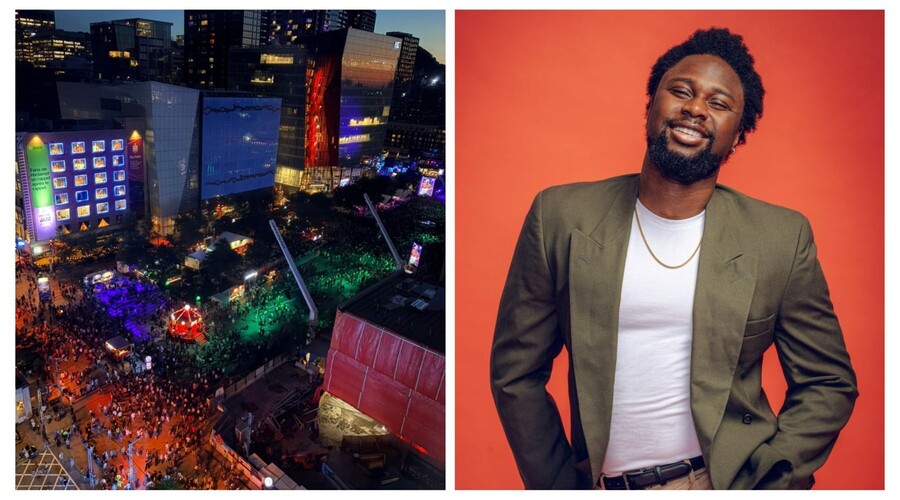
"Distance," he says, "shapes how differently people in the industry see the politics of the genre."
What he does control is the booking of musical acts. Parity across every stage is his first filter, and after that, representing the city Montreal actually is: a large Haitian community, a large French-speaking West African community, all showing up in who gets the main stage. Nyka has played there, and Kes, the Trinidadian soca band, drew what Keita calls the biggest single-day crowd in a decade, closing a street the festival had never been allowed to close before.
He's also quick to point out that Montreal's place in jazz history isn't incidental.
"The city was a refuge for Black musicians during Prohibition, when American players could cross the border and work clubs that couldn't exist at home," he tells me. "One of the biggest names in the history of the music, Oscar Peterson, came out of Montreal itself."
Accessibility is just as central to how Keita programs the festival as parity. Roughly 65 % of the festival's shows are free, a deliberate choice that allows audiences to stumble upon artists they might never have bought a ticket to see. That same philosophy extends to The Academy, a series of masterclasses and artist talks that runs alongside the festival.
He's watched its impact unfold in real time. He tells me about a teenager who stopped him on the street to say he'd attended every Academy session, hoping to save enough money to buy an instrument his parents couldn't afford.
For Keita, that's the point. “Access to world-class musicians, and the kind of conversations normally reserved for industry insiders, shouldn't depend on money or connections,” he insists. “It's one small but intentional way of ensuring the next generation, especially young people who see themselves reflected on stage, has the chance to be in the room too.”
To understand how that history took root, I head to Little Burgundy, the former heart of Black Montreal, situated between Saint-Henri and Griffintown, just north of the Lachine Canal. I am there to meet Rito Joseph, a self-taught historian and guide, who has dedicated his work to uncovering the stories too often left out of the city's history.
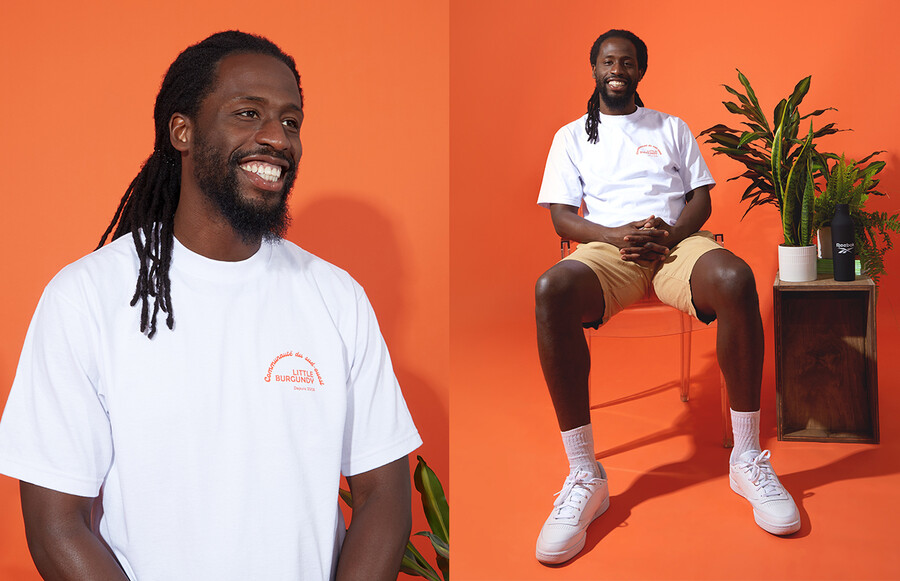
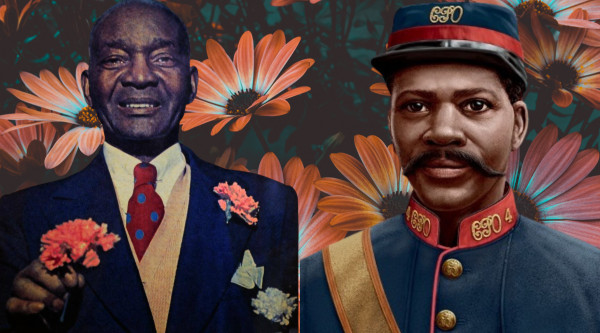
Until the 1950s, many Black men in Montreal worked for the railway companies as porters and sleeping-car employees based out of Windsor and Bonaventure stations.
"Little Burgundy grew up around that proximity to the rail yards," Joseph says, gesturing toward the colourful murals of Oliver Jones and Oscar Peterson. "The neighbourhood became the cultural home of Black Montreal, the same community that produced the city's jazz scene and its ties to the touring Black musicians who passed through during Prohibition."
Joseph doesn't romanticize the neighbourhood's past. He's direct about what followed: “Highway construction and gentrification hollowed the neighbourhood out, scattering the community that built it.”
It’s a history rarely told alongside the mythology of the jazz festival, even though one made the other possible.
And yet the music never really left. Every summer it spills back into Montreal’s streets, proof that culture can outlast the neighbourhoods that first nurtured it.
A few blocks from the festival grounds, that same resilience appears on the plate.
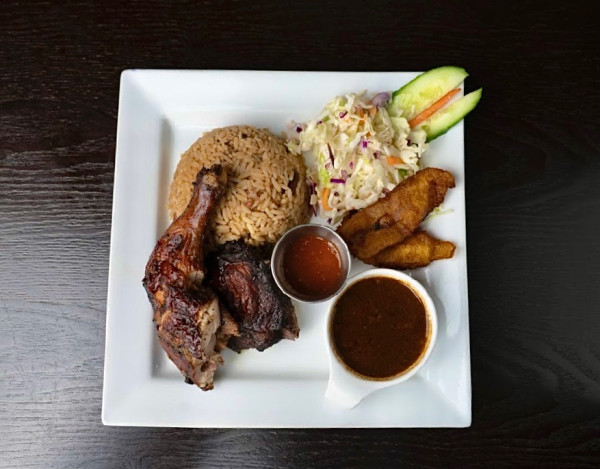
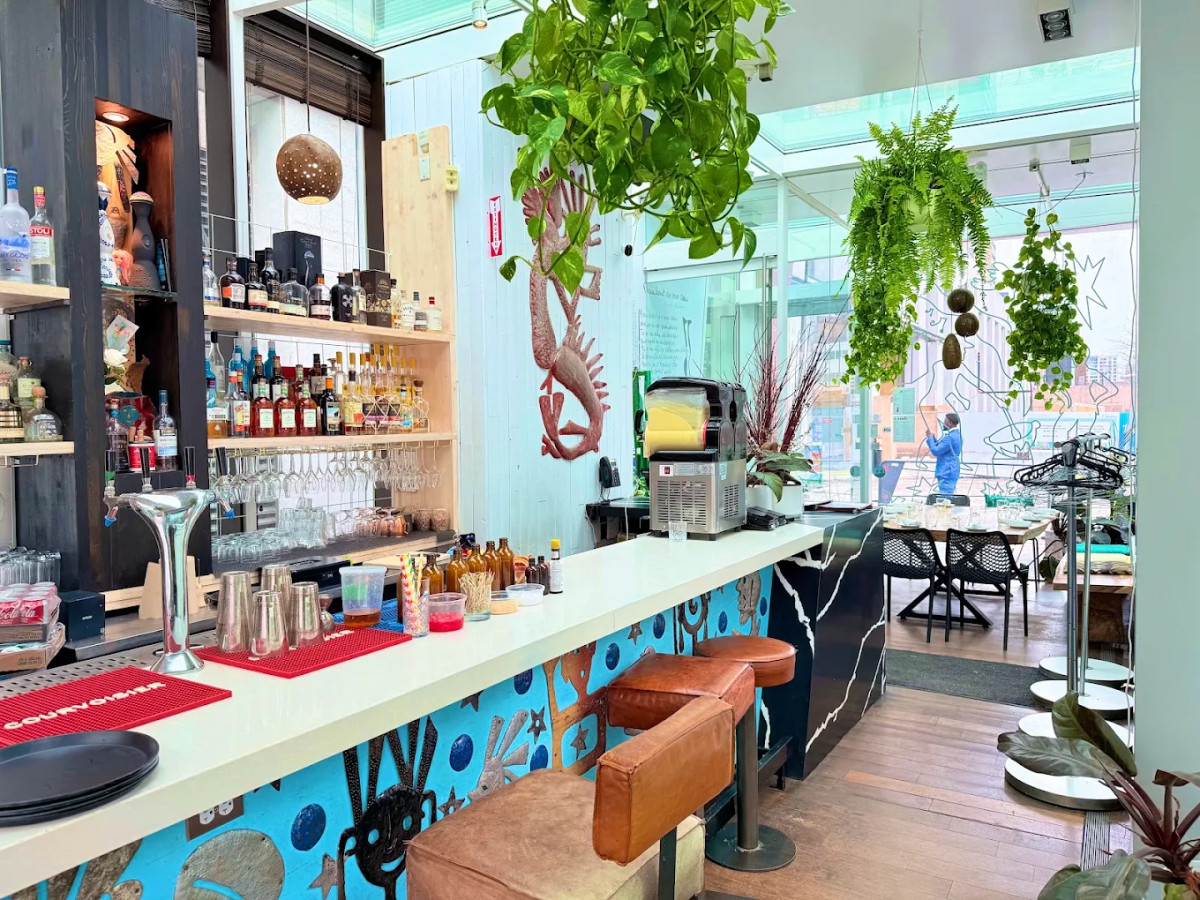
At Kamuy, chef Paul Toussaint built his Haitian-Caribbean fusion restaurant around the idea that food should tell a story rather than follow a template. For him, Montreal is a city where diners demand authenticity.
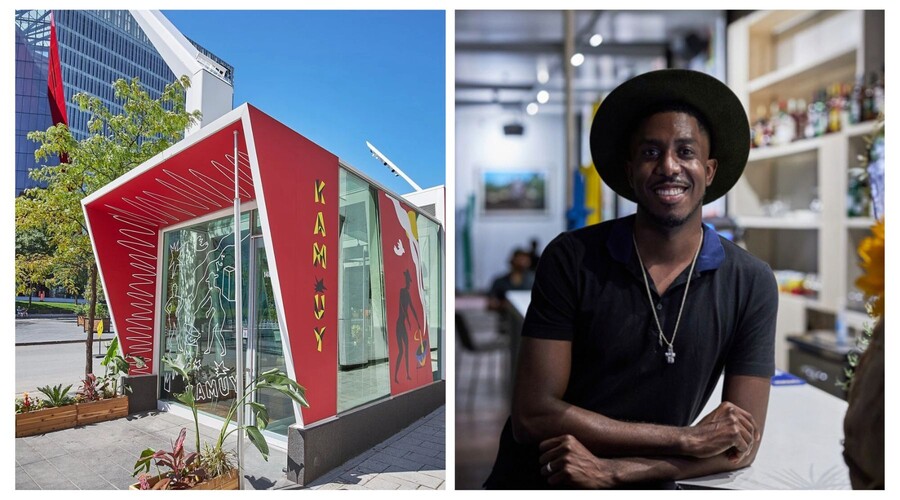
“They don’t give you that chance to fake it,” he laughs. “Because the culture demands the real thing behind it.”
His seasonal menu blends the bold flavours of his Haitian heritage with fresh Quebec ingredients and an infectious sense of hospitality.
When I mention Michelin’s recent arrival in Montreal, Toussaint shrugs off the pursuit of stars.
“My first job is to make my culture well represented,” he says, “and doing my cuisine best.”
Then he smiles.
“Haiti is my soul. Montreal is what keeps me alive.”
Nearby, in Old Montreal, Kwizinn chef Mike Lafaille tells a different story.
Visually impaired from a young age, he found that mentioning his disability in interviews often ended job opportunities before they began.
"As soon as I would mention that I'm visually impaired," he says, "it would not work."
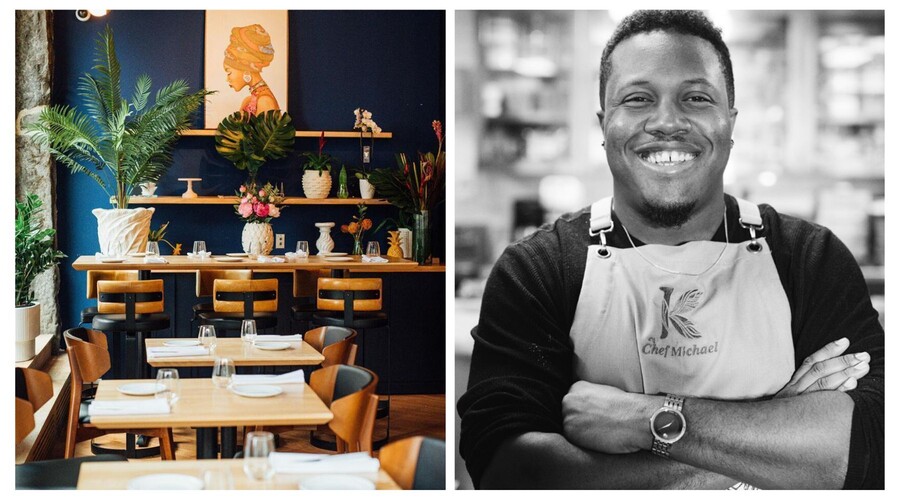
So he built his own kitchen.
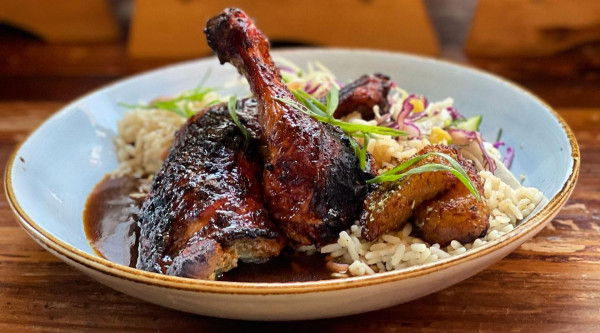
As I dig into a succulent oxtail curry, Lafaille explains that his food reflects both Haiti and New Orleans, treating Caribbean cuisine with the same care and respect diners often associate with French or Italian cooking.
"My food is a story," he tells me. "It's between Haiti and New Orleans... it's my culture."
His ambition extends well beyond his restaurant. Soon, he'll spend a year training in Europe before returning to Montreal to mentor the next generation of chefs. He also has his sights set on international cooking competitions—not simply to compete but to win.
"I don't want to be there just to be a Black face," he says. "I want to be there because I'm the best."
Lafaille raises a frustration that seems to echo across the industry: a scarcity mindset that keeps Black-owned businesses in Montreal competing instead of building together. "I find that Black community should really just accept that we could win it together.”
Yet what lingers most isn't the struggle, it's the love underneath it. Plates built from homesickness, family recipes and a determination to ensure Caribbean cuisine is valued on its own terms. That love keeps the culture alive, one dining room at a time.
Montreal's Black history isn't tucked away in museums or commemorative plaques, although those exist too. It's playing from festival stages, echoing through the streets of Little Burgundy and arriving at the table course by course.
If you know where to look, Montreal reveals itself as something more than a festival city. It's a place where Black culture isn't simply remembered, it is still being created every single day.