
 By
By Many young Black women across Canada are experiencing the same challenges.
They have focused on their education and doing ‘the right thing’ to find themselves in a cycle of underemployment and struggling to make ends meet—all while not working in the fields they’ve studied.
New national research from Fora: Network for Change, a nonprofit that supports young women and gender-diverse leaders, suggests this is not simply a question of job access, but of job quality and mobility.
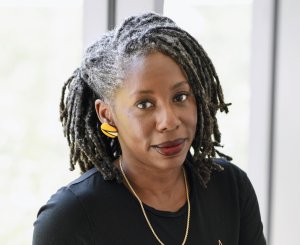
“We define underemployment as being employed, but not being able to use your skills, availability, and professional capacity to really advance and sustain yourself,” explains Emma Asiedu-Akrofi, Fora’s Chief Executive Officer.
Their research found that nearly 80% of respondents can’t manage the cost of living on their current salaries, and almost three-quarters are working more than one job to stay afloat. At the same time, 41% identify race as a barrier to securing meaningful employment, while 94% of respondents said identity was a factor. The research also showed that race plays a role in upward mobility and career progression.
 Emma Asiedu Akrofi, CEO of Fora: Network for Change
Young people can’t focus on growing their careers if they are focused on making ends meet by working multiple jobs. “If you're working two and three jobs, you're not able to establish yourself in one career because you're just trying to turn the lights on and pay the bills, right?” says Asiedu-Akrofi. “And if you're not being able to focus on one [job], you're not able to expand your network intentionally. You're not able to think long term because you're just thinking about sustaining yourself in the here and now.”
Describing herself as an “underemployed, possible undiagnosed neurodivergent,” Rock, 32, graduated in 2016 with a degree in graphic design. She tried to find a job in graphic design but had no luck. “Honestly, there were some overall confidence issues there as well, I wasn't really hearing back from anyone, which, of course, doesn't help.”
In 2017, she went back to school and earned a small-business entrepreneurship certificate. In 2018, she got a job doing email support at a call centre. “The job taught me a lot of things, and I got to write every day, which I think paid dividends later, but it was not an enjoyable environment,” she says. “So, I did end up leaving, and I found a reception job at [my] church denomination’s head office.”
Juggling both reception duties and graphic design work, Rock left when the design duties clashed with her reception responsibilities. She started her cleaning job earlier this year. “I've been able to focus some more on my creative stuff, especially the art and the writing, but you have bills to pay, so you have to figure something out with that. Though I am in the process of selling one of my paintings, which is great.”
“I don't see my race as a barrier”
J.S, 25, returned to Canada from abroad seven years ago to complete her degree. Working a minimum wage job and going to school full-time, she struggled to make ends meet, so she dropped out. Now, she’s enrolled in an IT program and is saving to pay for her final semester.
J.S. has worked full-time in customer service, technical support, and IT analysis. She is a Microsoft-certified professional and is completing several additional certifications. Her last job was in cybersecurity at a finance firm, where she was unexpectedly let go in late 2025.
She’s been unemployed since.
One reason J.S. believes it’s taking longer to find a job is that recruiters are lowballing her. “They're trying to get you to accept, a 50K, 60K salary, which is what I was being paid four years ago. The salaries have pretty much stagnated over the past three years. Everything is getting more expensive. It's not great.”
While she considers herself lucky to land interviews, today’s economy has made it challenging to land a stable job where the compensation matches her skills. Recently, she had an in-person interview for a technical support role but she felt the senior manager was skeptical of her qualifications.
“The resume shows my experience. It shows that I'm able to do the job. I didn’t have a good feeling about the interview,” she says. “I also made it clear that even if I get this position, it's important to be in a place where I can grow and my skill set can be useful.”
After the interview, J.S. was getting the runaround from the employer. The HR manager would send daily emails with excuses about why she couldn’t respond about the position. “She was dragging me along. Something about it just felt a bit malicious, and I was like, ‘I'm not doing this. I'm going to block you and move on.’”
While Fora’s research does mention race and identity as barriers to stable employment, J.S. doesn’t feel her current job situation is due to her race—she is looking for employers where she can thrive in her career. “I know that [race] definitely has an impact in terms of my possibility to get hired, but the way I see it is I wouldn't want to work for a place that wouldn't want to have someone because of their race. So, I don't see it as a loss.”
“For me, it’s always been a struggle”
For generations, Black Canadians—including their grandparents, parents, and today’s young people—were taught that pursuing a post-secondary education would mean success, says Asiedu-Akrofi. Unfortunately, this formula isn’t a magic bullet, even for immigrants or those born or raised in Canada.
According to the Fora research, 80% of respondents said their jobs do not meet their basic financial needs, and 80% have worked more than two jobs at one point just to make ends meet. More than half of respondents (55%) felt stuck in entry-level positions.
This is J.J's story.
A graduate of Carleton University’s mass communications degree, J.J, 35, does have some regrets. “Now, in hindsight, I feel like it was somewhat of a useless degree. My goal was always to be a journalist, work as a writer and in radio and broadcast in some way, but even when I was in university, I had a hard time finding jobs.”
During university, J.J would return to Toronto and spend the summer break unemployed, even after submitting hundreds of applications and interviewing for all manner of jobs. She was never successful, and she never knew why. “Some people can go from contract to contract, and then they get a job,” she says. “For me, it has always been a struggle. I've always been underemployed or unemployed.”
Things haven’t gotten easier since graduation. She’s trying to figure out how to increase her income streams to pay for rent, food, and life and is contemplating moving out of the Greater Toronto Area for better job opportunities.
J.J believes one reason she’s been consistently underemployed is her African name. “My resume shows that I have communication skills. I have a communication degree, but for some reason, I don't get callbacks,” she says. “I've even thought about changing my name or at least using my middle name, which is not African, to see if that would make a difference in responses.”
While she’s a little older than the research’s focus group—youth aged 18 to 29—J.J completely understands their plight because she’s living it.
“Rent takes the majority of my money, and I realize how much my paycheck does not stretch far right now,” she says. “Being in fight or flight mode, it doesn't give you the opportunity to think about the future and to think about the ways in which you want to build a life for yourself that exists outside of work.”
“Your network is your net worth”
While the challenges are complex, some organizations like Fora are working to create pathways for youth. While there is no guaranteed solution to escape underemployment, Asiedu-Akrofi says young people must cultivate both their professional and personal connections.
“I will say that your network is your net worth, and I don't mean that in an extractive way,” she says. “I'm not saying it has to be unpaid labour through volunteering all the time, but finding creative ways that it doesn't feel like it's just a one-sided relationship is very important. I know it's challenging when you have to work two or three jobs, just to keep the lights on.”
Fora has been supporting youth since 2009 by providing strong leadership and career development training, particularly in governance. Young people receive comprehensive training on serving on nonprofit boards, followed by a one-year board placement with organizations across Canada—ranging from large foundations like the Canadian Women’s Foundation to small grassroots groups.
“They get the training. They get the experiential learning, and they start to build out that network,” she explains. “These opportunities continue to build your professional skills and background while doing the networking that's so important, even in this very chaotic, scary, precarious space that we're in.”
“I feel I was sold a lie”
So, how are these young people managing?
J.S. is focused on her job search and on her hobbies to keep her mental well-being strong—but it’s not easy. “Things are getting more expensive. The job market is getting worse,” she says. ”I have social media, but I delete most of the apps on weekdays. I only reinstall them when I need something, but I tell most of my friends, if you want to reach me, send me an email, because I know it affects me mentally.”
J.J is reassessing her career and what success feels like in this economy. “I feel like I was sold a lie, I guess. When I graduated in my 20s, the barriers that exist now weren’t in my plan. I thought, I'm on the right track. I just need to find a job, and then I can make money and start moving up,” she says. “And 14 years later, I am still doing coordinator communication jobs and not being able to do a manager role. The job I'm doing now, I'm overqualified for it.”
Rock says you can feel like a failure—even when the situation isn’t necessarily about you or your skills. Friends with whom she went to school are working in graphic design, and others are retraining and exploring other interests.
And that shift means rethinking what success looks like.
“You feel like you're behind because you have those societal markers that you're supposed to be hitting and you expect to be in a certain place in your life,” she says. “Even when I was in school, before I graduated, I'm like, ‘I'm going to get a job at a studio in Toronto, and I'm going to have an apartment.’ That was not God's plan for me, and I'm learning to accept that and lean into that instead of freaking out.”