 By
By You've described your symptoms. You've shown your skin. And the person across from you looks at you, shrugs, and says there's nothing more they can do.
That's not a worst-case scenario. For too many Black Canadians, that's just a Tuesday.
There are fewer than 10 Black dermatologists in all of Canada serving a Black population of roughly 1.5 million people. That gap doesn't just mean longer waits or fewer choices. It means Black patients are regularly seen by providers who were trained on textbooks that didn't include their skin, who misread their conditions, underestimate the urgency of their treatment, and sometimes leave them worse off than when they walked in.
Two people who know this firsthand asked to remain anonymous, but their stories are worth telling.
The first is a Black man now in his mid-twenties who developed seborrheic dermatitis around age 15, bringing flaky skin and relentless flare-ups anywhere thick hair grew: his scalp, under his beard. After a referral finally landed him in front of a dermatologist, hydrocortisone was tried and failed, and he was told plainly that he would just have to live with the dryness. He was a teenager and he accepted it. Years later, doing his own research and mixing his own beard oils, he discovered that MCT oil is commonly used to manage the condition. He tried it and the flare-ups stopped. All of them. No dermatologist, Black or white (he's clear about that), ever mentioned it. His point isn't about race. It's that he walked away from a medical appointment feeling like his hair texture was the problem and that he'd been rushed out the door rather than actually heard. Those are two very different kinds of failure.
The second is a young Black woman whose mother, a healthcare professional, suspected Acanthosis nigricans when she saw her daughter's skin: dark, velvety, thickened patches forming in body folds around the neck, armpits, and groin. She described what she was seeing to her Black colleagues in medicine and they named the condition before a biopsy was ever done. The dermatologist confirmed it afterward. A cream helped for a while, then the condition returned, and a second dermatologist chalked it up to age and hormones, telling the family the daughter would simply grow out of it. The mother was grateful for the diagnosis but couldn't shake one thing: her Black friends and colleagues, without gloves or equipment or an appointment, got there first. "The white dermatologist did nothing wrong," she'll tell you, and she means it. But there's something worth sitting with there. Familiarity with how conditions present on melanated skin can mean faster recognition, fewer unnecessary steps, and a patient who feels seen rather than processed.
Neither of these stories ends in catastrophe, and that's almost the problem. Both patients eventually got answers, but only after being dismissed, delayed, or left to figure things out on their own.
The dermatology education problem is real, and it goes back decades.
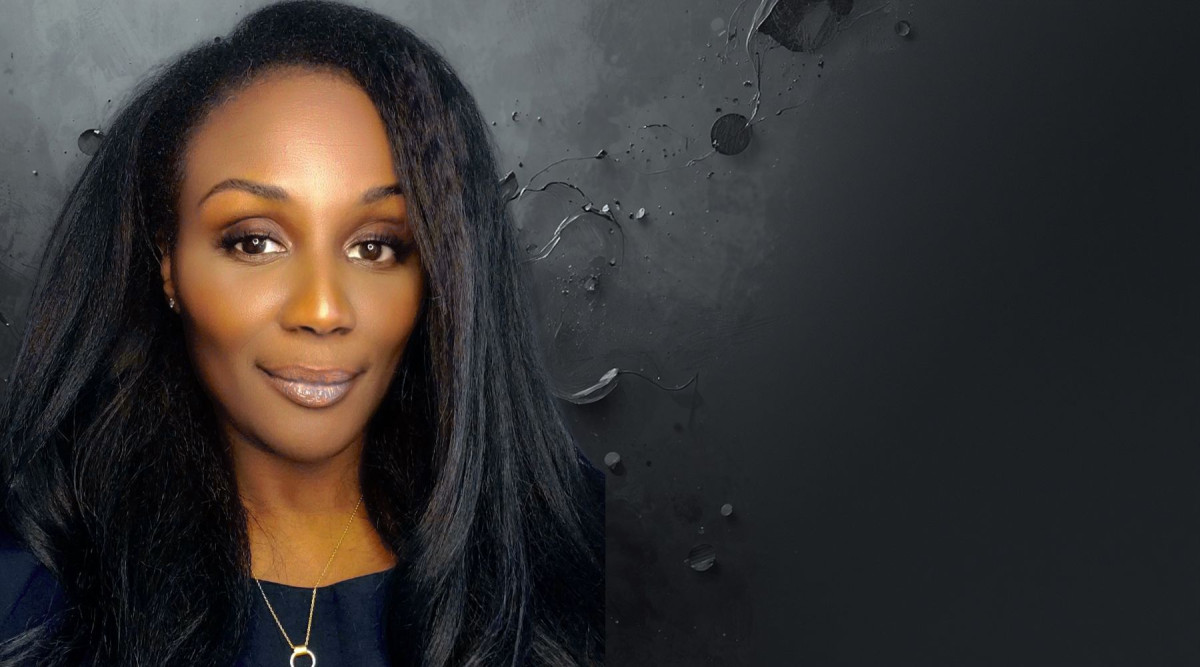
Dr. Marissa Joseph has seen this system from the inside. A dermatologist and the Medical Director of RKS Dermatology Centre at Women's College Hospital, she was recently appointed as AbbVie Chair in Ethnodermatology at the University of Toronto, a role that tells you exactly where the gaps are simply by the fact that it needed to exist.
Dr. Joseph studied pediatrics with a subspecialty in dermatology and has spent her career watching how skin tells a story, shaping how we see ourselves, how the world sees us, and how confident we feel walking through it. She started advocating for change in her field when she realized she was often the only Black woman in the room, not just in dermatology but in the sciences altogether.
{https://www.instagram.com/reel/DVqWLMUBDMm/}
The education gap she keeps coming back to is this: for a long time, dermatology textbooks only showed conditions on white skin. That's not a small oversight. That's generations of doctors trained to look for things that don't always look the same on darker skin.
"Conditions like eczema, psoriasis or lupus — the redness that is seen in pigmented skin can often appear as purple, brown, gray, or even have a different distribution or pattern than doctors are used to looking for in darker skin," Dr. Joseph explains. "Sometimes not having an understanding that some conditions that won't leave any marks on white skin can leave a lot of pigmentation and marks on darker skin. So the threshold or the necessity for treatment should be earlier."
Read that again. Treatment should begin earlier for darker skin in some cases, and that's not happening if your doctor doesn't know what they're looking for.
Hair loss is another painful example. Dr. Joseph points out that frequent hair loss in Black women is regularly misdiagnosed as age-related when the actual cause is often Central Centrifugal Cicatricial Alopecia (CCCA). Left untreated, CCCA burns through follicles and can cause permanent disfigurement. Not "a little thinning." Permanent.
So what does change actually look like?
It doesn't start and end with having a Black dermatologist; it starts with intention inside the profession itself.
"As experts in skin disease, we teach other healthcare providers about skin disease," Dr. Joseph says. "When we are talking to primary care physicians, allied health professionals, or nurses, we have to teach the management and recognition of skin disease in brown and Black skin in dermatology. Embedding [this education], incorporating it, and advocating for that in our teaching is essential. The key is intention, even for dermatologists who are leading education, but also for their own continuing education, choosing to learn beyond what's been historically taught requires intention. Dermatologists of all backgrounds can continue to attend education sessions on skin of colour, collaborate with diverse colleagues, make sure that their teaching and patient materials reflect a range of skin tones."
Dr. Joseph is careful not to reduce good care to racial matching. Most of her patients come from backgrounds different from hers. "Excellent care comes from listening, empathy, and expertise," she says. "Having a Black dermatologist can mean you don't have to explain how your skin scars, what inflammation looks like on your complexion or what hairstyle you have. There's often an immediate sense of trust and shared understanding. There's a certain comfort that comes with that." But she's honest: "Excellent care shouldn't depend on race similarity."
The problem is the reality we're actually living in. With fewer than 10 Black dermatologists across the entire country, most Black Canadians will never have the option to choose, and until the profession diversifies at scale, the responsibility sits with every dermatologist in practice to educate themselves, update their materials, and genuinely listen.
In Canada, you need a referral to see a dermatologist, which means your family doctor or GP is the first gatekeeper. "Lots of skin conditions that cause inflammation in the skin will be very different on darker skin," Dr. Joseph notes, and that means the people writing those referrals need the same training. The whole pipeline matters.
And then there's the aesthetics side, where the damage is often more visible.
Joanna Auguste founded The Face Lab in 2020. She's a clinical director working in cosmetic skincare, and she built her clinic specifically because two things were nearly impossible to find at the same time: a practice that could actually serve skin of colour and one that used treatments grounded in real evidence.
The Face Lab uses lasers that are melanin-safe and BIPOC-friendly, and that choice was deliberate, informed by what Auguste had seen go wrong elsewhere.
"People have been burned from using lasers and technology that wasn't really tested on the skin of colour, or the practitioners were not versed in how to treat the skin of colour," Auguste says.
{https://www.instagram.com/p/DOdtuwujVsY/}
Skin damaged in a clinic that was supposed to help it, and that's not a hypothetical risk. It's what brought people to Auguste in the first place: clients who came in already misdiagnosed, already ignored, already carrying marks from someone else's mistake.
"I know that there are other technologies I could have in the clinic that might be great for lighter skin tones, but then I can't use them for other skin types. There's so much diversity in skin colour and melanated skin. There are people who are maybe white presenting who are actually biracial."
Rosacea is one condition she sees misread often because it presents differently on pigmented skin, and in aesthetics, that margin for error is genuinely unforgiving.
Auguste travelled to conferences in the United States, where the field is further along, to vet the technology herself. She met dermatologists who work specifically on deeply pigmented skin and confirmed that the equipment she was considering had been tested on Fitzpatrick scale type 6, some of the deepest tones available. That due diligence is what let her bring those machines into her clinic with confidence. She's also presented to her own industry on how to work with pigmented skin, covering how to prepare, treat, and care for it afterward to achieve real results.
She's also been direct with the vendors selling to her.
"Before I was bringing in devices, I had someone reach out to me to sell their product, whom I turned to and said, 'I don't see any person of colour on your marketing material. I don't see any studies that include them, so why would I bring this into The Face Lab when this is important to me?'"
That's the question more practitioners should be asking. Auguste says the industry has improved in the last five years, but improvement and equity are not the same thing.
Her broader point is about trust. When Black patients consistently encounter spaces that weren't built with them in mind, whether that's dermatology, injectables, or laser treatments, they stop going. They delay care. They manage at home what should be treated professionally, and the long-term cost of that is real.
What you can do right now.
Self-advocacy in medical spaces is exhausting and it shouldn't have to fall on patients. But the system isn't fixed yet, and your skin can't wait.
Ask for a second opinion, not because you're being difficult, but because it's your right and your health. Dr. Joseph puts it plainly: "If you don't feel heard absolutely, you need to seek a physician where you do."
Do your research, not to replace your doctor, but to walk in informed. The man who found MCT oil got there because he stopped assuming the professional had asked every question. He started asking his own.
Find providers who've genuinely invested in understanding your skin. Ask directly: what training have you done in skin of colour? What equipment do you use and who was it tested on? A good provider won't be offended. A defensive one is already telling you something.
And support the practitioners, like Dr. Joseph and Joanna Auguste, who are doing this work loudly enough that the rest of the field has to pay attention. Change in medicine is slow, institutional, and resistant, but it does move when enough people inside it refuse to accept the alternative.
There are fewer than 10 Black dermatologists in Canada. That number needs to change, and so does everything that made it possible.