 By
By My white partner and I almost stop, shocked. I heard it before he did, but I knew there was nothing I could do. I could tell by looking at her that this woman lived in the park and looked unwell. My partner asked if I was okay, and I said I was, even though I was far from it. But even though I wasn’t okay, what could be done? How can you hold someone accountable for harming you if they can’t comprehend the harm they’ve caused or if the harm was caused unintentionally?
When that slur was said to me in Victoria, I was immediately worried for my safety. I felt ashamed having that word said around my partner. I was paranoid that someone else in the park heard and maybe agreed with her slur. All of this raced through my head before I could process that she was likely unwell and said the word unintentionally.
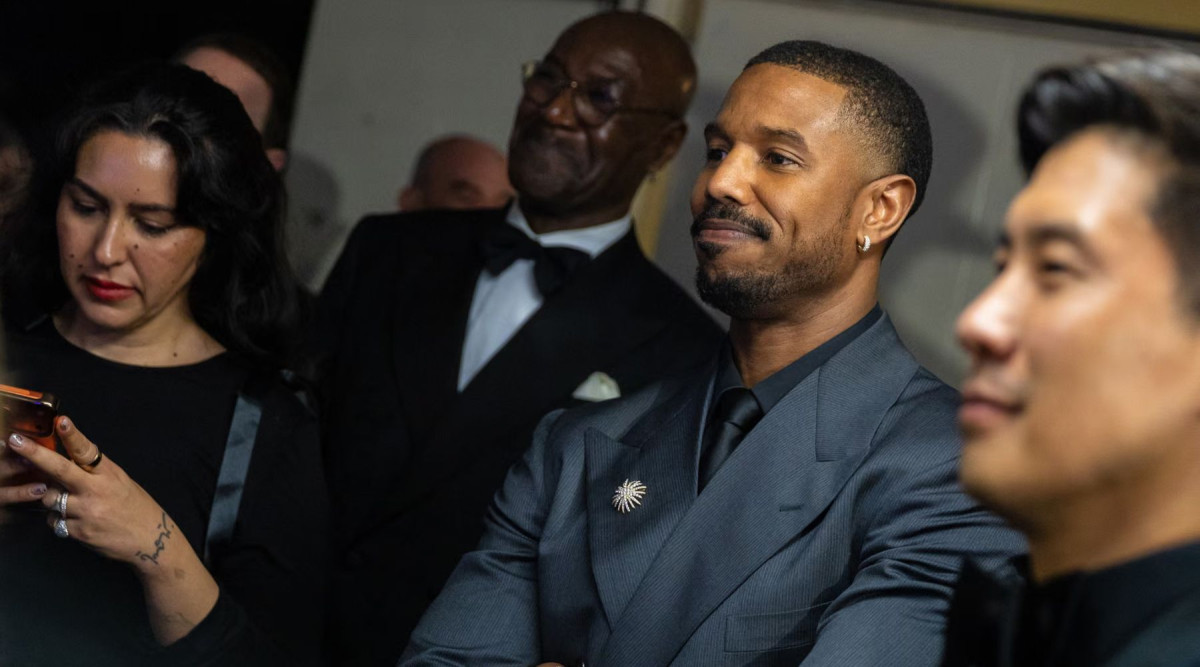
Recently, actors Michael B. Jordan and Delroy Lindo were on stage presenting at the BAFTA awards when John Davidson, who has Tourette’s Syndrome and was promoting a movie on this illness, said the N word. The BAFTAs had several moments ahead of taping where they warned the audience of Davidson’s presence and that he may have verbal tics but not to be alarmed. Davidson has a tic known as Coprolalia, where the person with Tourette's wants to say the most inappropriate or taboo thing possible. That evening, he also yelled the F slur while queer host Alan Cummings was on stage. He was under the belief that no one on stage could hear him. After Davidson was made aware that he could be heard from the stage by Jordan and Lindo’s reaction, and Cummings coming on stage to acknowledge what had occurred, he chose to leave. The BBC’s taping of the show and subsequent airing edited out most of the tics said, except for the use of the N-word, the reaction on Jordan and Lindo’s faces, and the moment Cummings came on stage to acknowledge the unfortunate exchange.
Since this has happened, the news hasn’t let up about the story. The BBC has been accused of being racist for leaving the moment in the edited footage. The editing team claims they didn't hear it. Davidson has been accused of being racist despite his Tourette's diagnosis and having Coprolalia to explain what occurred, though he also released a statement and has apologized for what happened. During the NAACP Awards, Lindo and Jordan received standing ovations for the trauma they endured at that moment. Jayme Lawson, who played opposite them both in Sinners, recently offered her take, pointing out that the inclusion of someone with a disability in a space with minimal understanding of how it will impact others is not actually inclusion. Many were also outraged at the lack of support the BBC and BAFTA teams offered, with no one approaching Lindo or Jordan after the N word was used and they had finished presenting on stage.
While some may not understand the trauma of hearing a racial slur, I would describe it as triggering. Hearing the word, whether accidental or purposeful or through the result of mental illness, still brings the Black person back to a place of deep shame. It recalls times it was said with venom, hatred, shame, disgust. For those Afro-descendants of slave ancestors, it is especially demeaning, considering what your family went through, what they survived, how hard those people worked and yet you are still hearing this word used against you. What I can’t imagine is being in a place of distinction with your peers - thinking you are safe, you are respected, you are an amazing actor presenting on stage beside another amazing actor - and yet you still hear that word and feel that assault.
Tyler Ferguson, a Caribbean-Canadian woman in Toronto, was also called the N word by a precariously housed person. She arrived at Yonge and Eglington station and was annoyed that she had to go into the office on a day she could normally work from home. When she arrived at the station and walked up a flight of stairs she arrived at a landing where she was used to seeing a man sheltering there, and tended to pay no mind to him, and he ignored her. Today, however, he was having a crisis and was in a different area. “I'm on the escalator,” Ferguson shares. “I don't think he even realized what he was doing. He was freaking out. Security was right there, letting him freak out. He literally turned around and then just said [the N word], and I was in a sea of people.”
Ferguson thought to herself, ‘Do I freak out? Do I say anything?’ She was the only Black person around. Assessing the situation, the word was blurted out, but in a string of mumbled words rather than a formed sentence. Because this happened publicly, she felt awkward and didn’t want to get upset and be deemed ‘the angry Black lady’. She adds that the presence of security frustrated her because they said nothing and did nothing. Because she felt she would be looked down on for reacting, she carried those feelings into the office.
Nicole Franklin, MSW, RSW works at Live Free Counselling Services and is part of the Black Therapist Collective in Ontario. The Black Therapist Collective is currently made up of Black women who offer services to all individuals but has a specific focus on supporting Black people. In discussing all three of these somewhat nuanced situations, Franklin rightfully pointed out that the trauma and assault on a Black person is the same no matter who said it or the context. “You're talking about people who may not know or understand the impact of that word. You're talking about people who might be experiencing a mental health crisis. These are categories of people who might not understand the gravity of the word; however, your body cannot tell that difference. We know that because the name for what you're experiencing is racial trauma and your body can't tell the difference or separate whether that person does or doesn't know what they're saying.” She goes on to add that the N word, comparable to a weapon being used, gives Black people a feeling that even Black children can identify as uncomfortable before knowing the gravity of the word.
Franklin acknowledges that despite the nature of the bizarre BAFTA’s encounter, even if that moment had been in private, because the body would be focused on protecting itself, it’s likely Lindo and Jordan would have always needed time to process and respond, just as Ferguson and I did. She adds that as Black people, walking in a colonial world, experience racial trauma on a smaller scale daily and often these huge, blatantly racist experiences bring up those smaller experiences. So we tend to react or feel all of these injustices at once. “Your body is even responding to structural racism and structural violence that you might have experienced, which brings other emotions, like grief, to the surface,” Franklin explains.
For Franklin, another key factor that can explain the depth of trauma inflicted at the BAFTAs is the masking Lindo and Jordan had to do while being, essentially, called the N Word at work. “A lot of racial trauma that we experience, unfortunately, is also at work. There's this nod and smile that so many people have to do at work and in professional settings when they experience racism and anti-Blackness. They have to put on a smile, pretend it didn't happen and keep going - like when someone tries to touch their hair, when someone uses microaggressions, or if someone uses the N word”. She adds that on top of that the audience component at the BAFTAs further forces the actors to keep on the mask, maintain professionalism, and jump through hoops just to get through the day as a Black person working in oppressive systems.
This is why, Franklin explains, sometimes we get home and when we finally get a moment to ourselves, or maybe months later when we can finally process, we break and feel all of the emotions we were trying not to feel. Franklin shares, “Sometimes it takes a recounting of [the experience] that happens after the event or multiple times after that event, where the anger comes back up. The stress, the pain, the sadness, the grief all comes rushing back up.” It’s often in these moments that we might minimize the impact, downplay the situation, or even make excuses about how the situation wasn’t a big deal because the person who said the slur ‘didn’t mean it’. However, this keeps the Black person from allowing their body to truly feel the impact of what happened.
While Franklin says there is no quick fix for processing these awful situations, she is encouraged that these conversations will help the Black community. Firstly, by holding accountable the white systems in place that allowed a slur to be aired on television but also because these conversations allow Black victims of racial trauma to process. Franklin also believes in going a step further. “Within our practice, we're engaging with folks who've had these experiences, and as a counsellor, you've validated their feelings, you've allowed them to really process that racial trauma.”
Franklin says radical support is counteracting an act of violence and hate with acts of care. “It’s so important that you can have a place, a safe place to talk about it, to unpack it, to offer support.” The unfortunate truth is that these stories are often shared among the Black community, and no matter the mental state of the person saying the N word, it is up to us as a community to come together and offer radical support to one another.