 By
By Her exhibit Camille Turner: Hometown Queen, showing at the Art Gallery of Hamilton until January 2027, explores that contradiction through a 30-year retrospective. The show spans her performance work as Miss Canadiana, her Afrofuturist pieces, Canada's ugly history with slavery, and her own family's story.
Turner was nine when she arrived in Canada from Jamaica, and she remembers white teachers warning her about the "teasing" she would inevitably face. Growing up in Sarnia, she recalls, "One teacher took me aside and said, 'The children are gonna tease you because you're another colour. Just tell them that sticks and stones will break my bones, but words will never hurt me'. That was how they were preparing me. I just remember the very first time I'm on a playground and this big blonde boy called me the N word. It's a strange feeling." She later moved to Hamilton, where she described the racism as more brazen.
Turner's first work to touch on identity was Suit of Armour, about the psychology of growing up as a Black child in Canada. She made it in collaboration with white artist Nancy Patterson, who mentored her and helped her write grants.
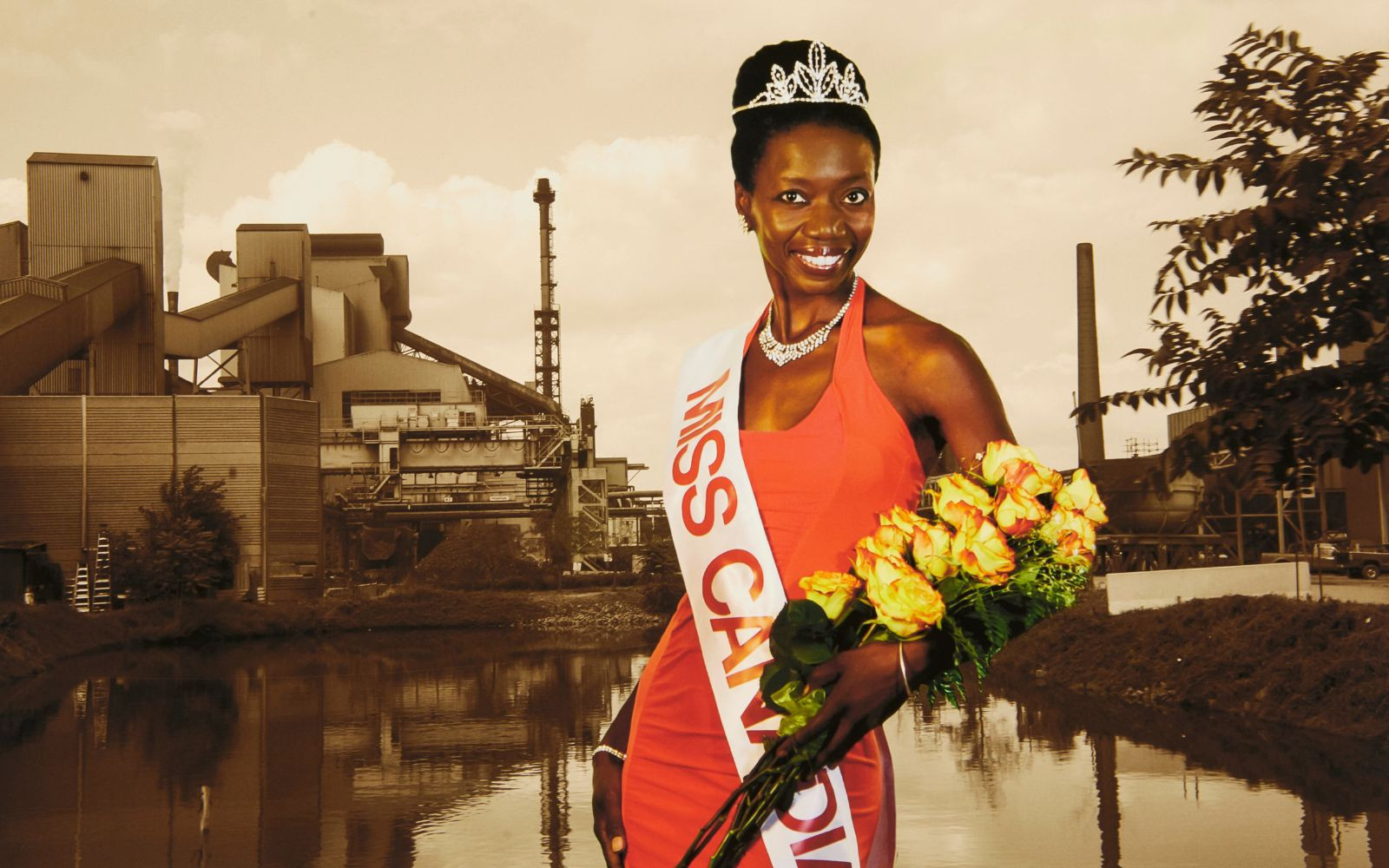
It took Turner until her 40s to develop the character Miss Canadiana. She wrestled with the idea for four years before her first performance on Canada Day in 2002. "I was in North Bay, and I'm walking through this mall, and people are staring at me," Turner shares. "I felt this irony of the multicultural idea that Canada has about itself: 'We're not like the people in the States. We're different. We're this place where everybody belongs.' That's what they say, but that's totally not what I was feeling. It was the contrast between those two things, what I was living and what I was told - that was what Canada was all about. The irony made this image pop into my head of myself as a representative of Canadian heritage."
{https://www.youtube.com/watch?v=OiWEyoCBhcg}
The image stayed with her until she finally developed Miss Canadiana and took her to the streets of Ottawa. For that first performance, she walked to Capitol Hill in a red top and skirt, a pageant-style hat, and a sash she'd made herself with vinyl letters glued on. People stared as she walked, but almost through her, which let her enjoy the performance and settle into the character. She never had to say a word. People were charmed by her appearance alone. Even in the outfit, even with the name Miss Canadiana, she still got asked where she was from. "It challenges people because it really throws their assumptions in their face," Turner says. "They have to wrestle with all of the contradictions within themselves. It's a contradictory image because Blackness is still seen as foreign in Canada."
Turner performed as Miss Canadiana until 2016. She noticed the character would sometimes get under people's skin or spark something else, and she loved that about what she'd made. The first time she felt the real weight of the work was during her first historical piece, Miss Canadiana's Heritage and Culture Walking Tours. She was digging into the history of The Grange, the Toronto neighbourhood she was living in at the time. She knew a Black community had once been there but could see no trace of it, and she wanted to tell their story. She tracked down people who had lived there between 1940 and 1960 and interviewed them.
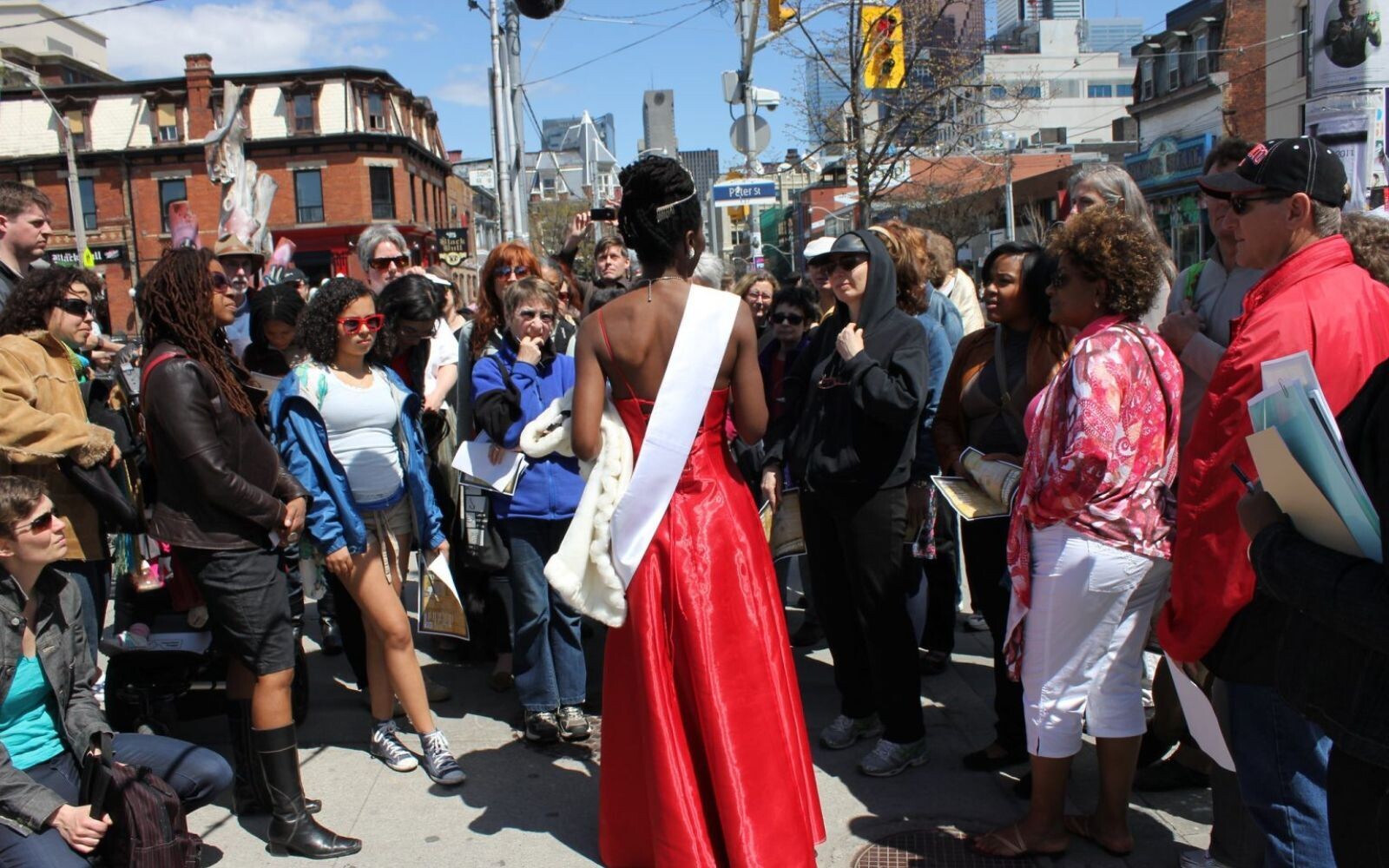 Miss Canadiana, 2005 (production still) directed by Sherisse Mohammed. Cinematographers/videographers: Camille Turner, Deedra Hartley, Agata Gidzinski. Courtesy of the artist.
The work led Turner to collaborate with Afua Cooper, who told her about Peggy Pompadour, a woman enslaved by Peter Russell, the administrator of Upper Canada, who called The Grange home from 1793 to the early 1800s. "I felt like I walked through a portal, and I could not go back to where I was," Turner shares.
"At the time, I was doing Miss Canadiana, so I used her as the storyteller. I'm telling these stories, I'm walking through the streets, I'm wearing a tiara and a gown, and these stories are heavy stories. Especially when it comes to Peggy. I felt like Miss Canadiana wasn't a big enough container to hold all of these stories, so I needed to expand. I needed to do something else." From there, Turner began exploring the heavier stories of Black Canadians. She started her master's in 2012, which is part of why she stopped performing as Miss Canadiana in 2016.
Turner made other performance pieces during her Miss Canadiana years too. While touring the character in Lethbridge, AB, she was hit again with the feeling of being an outsider. The coulees and V-shaped ravines made her feel like she was on the moon, everything alien and cratered. "I get into town and I realize from the way people are responding to me that I am the alien. I came to do this talk about Miss Canadiana, but this experience of being there in Lethbridge, this strange place that othered me, made me feel like I need to bring my alien nation."
That feeling led to a performance called The Final Frontier, where Turner and her siblings dressed in robes and set up at a market. They never spoke. They held bowls of grain and shared it with each other, and passersby would watch, some taking grains too. A camera crew, led by Sobaz Benjamin interviewed attendees afterward. Some asked if the artists needed money, some said they wanted their kids exposed to the arts, and some weren't sure who the performers were or whether they even spoke English. It became Turner's first Afrofuturist work.
An invitation to Senegal in 2004 left Turner with more questions than answers. She visited l'Île de Gorée, an island with the famous Door of No Return, where enslaved people held there would exit and never come back. The site is now UNESCO protected. "There was this feeling of being at the door and just thinking about 'how did my ancestors just get ripped from this place?' I was full of so much rage and so many questions, and it was a strange kind of feeling that I couldn't reconcile and couldn't understand at that time.
Fast forward to 2014, I got a Chalmers Grant from the Ontario Arts Council, and that allowed me to go back to Senegal. I spent two months there. That was when I was able to unfold a little bit more and to contemplate these questions." The deeper she sat with the questions, the more she found herself immersed in the painful history of her ancestors. Looking for some breathing room, she travelled five hours north to Saint-Louis, but an architectural walking tour there brought her to a home built by young French traders who also kept slaves.
The history was not something she could escape. "What was interesting is this place, unlike The Door of No Return, was unmarked. It's just this house, and there's a cellar – and it's a very dingy kind of dank cellar. There's this acrid smell. I can still smell it right now, just thinking about it. It was as if I fell back in time, and I could see people around me on this dirt floor astonished that I'm there, and they're all looking at me. I'm thinking 'How can I stop this thing that has happened from happening and traveling back in time?' This character that I had created, Gloria Smith, this Black Canadian woman who was a time traveler just popped into my head. What would Gloria do? She's traveling back in time to stop the slave trade from ever happening, and knowing that if she does that she won't exist."
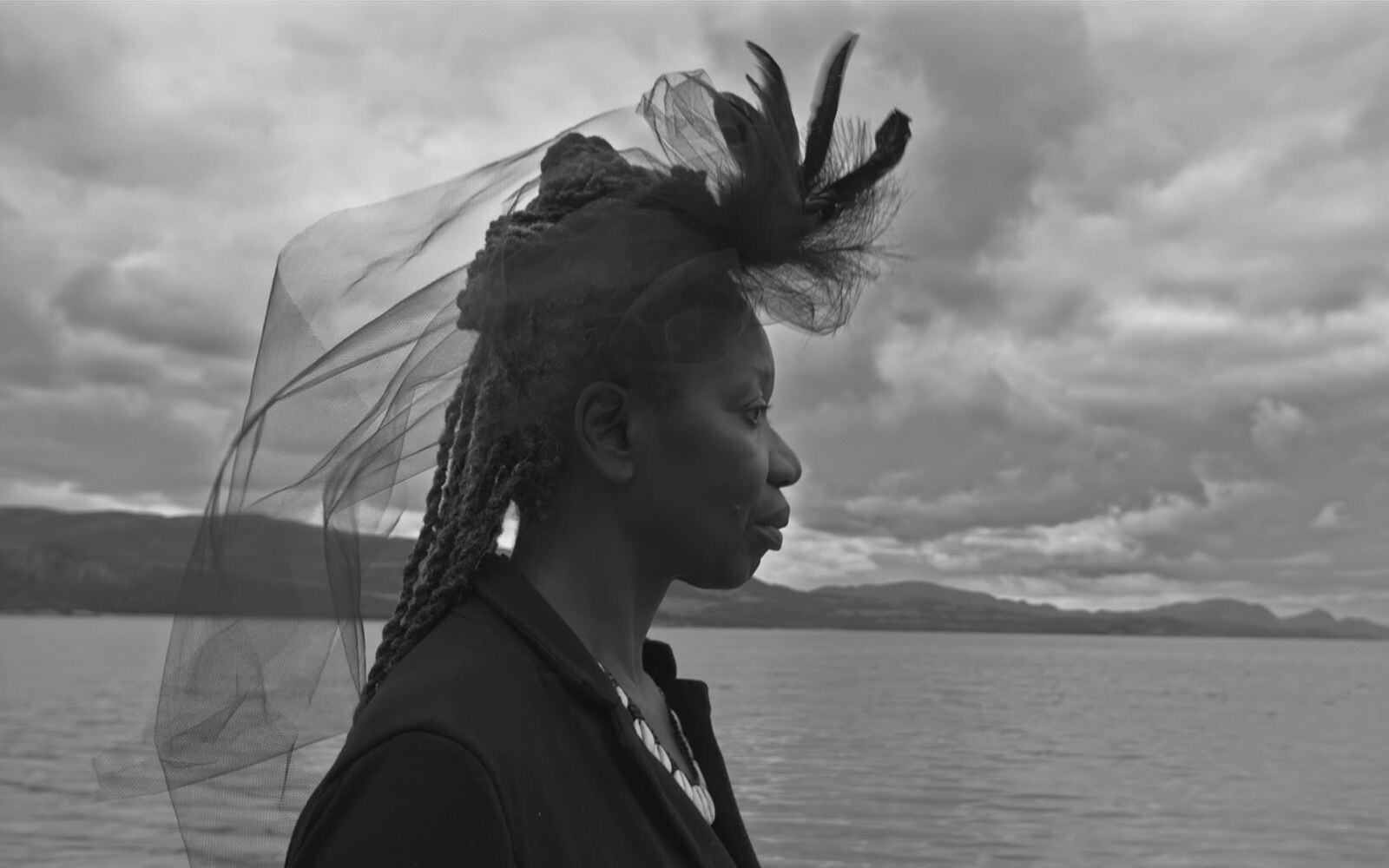 Camille Turner, Sticks and Bones(production still) single-channel video installation, 2023. Commissioned by Grenfell Art Gallery. Courtesy of the artist.
Gloria Smith led to more work, and to a new fixation: what lay on the other side of the ocean when you stared out from the Door of No Return. A year later, Turner visited Cape Spear in Newfoundland, knowing the door sat on the far side of the water. Bushra Junaid, a Newfoundland curator and friend of Turner's, showed her a document proving slave ships had been built in Newfoundland.
A few years later, the Bonavista Biennial invited Turner to Newfoundland for a residency called Two Rooms, where she dug deeper into the slave ships. Her husband encouraged her to check whether more had been built, and Turner found evidence that 42 slave ships were made along Canada's eastern seaboard and used in the transatlantic slave trade. She changed her PhD topic to focus on it.
"I just couldn't have imagined [the creation of the slave ships] because there's nothing in my education that told me that this could even be a possibility. The way that Canada paints itself as this innocent white space, it was such a contradiction. That became my PhD topic because what could be more interesting than this?" The findings became the source of more art in the retrospective.
Curator Melissa Bennett had followed Turner's work for 25 years and, as someone from Hamilton, knew the importance of showing it to younger artists. "We know that Camille's work will really have a strong impact on visitors and it's a great teaching opportunity for this complex history that you don't necessarily learn on the surface in Hamilton with people yet," Bennett says.
Her biggest challenge was making the performance pieces land with the same force inside a gallery, while acknowledging how little recognition the work received at the time. "Because Turner was practicing before everyone had cell phones, and there's so many artists like that… you could say Black women artists in Canada have been vastly underrepresented because they weren't recognized or popularized in the media at the time Through the '80s, '90s, 2000s, and even now though it is changing."
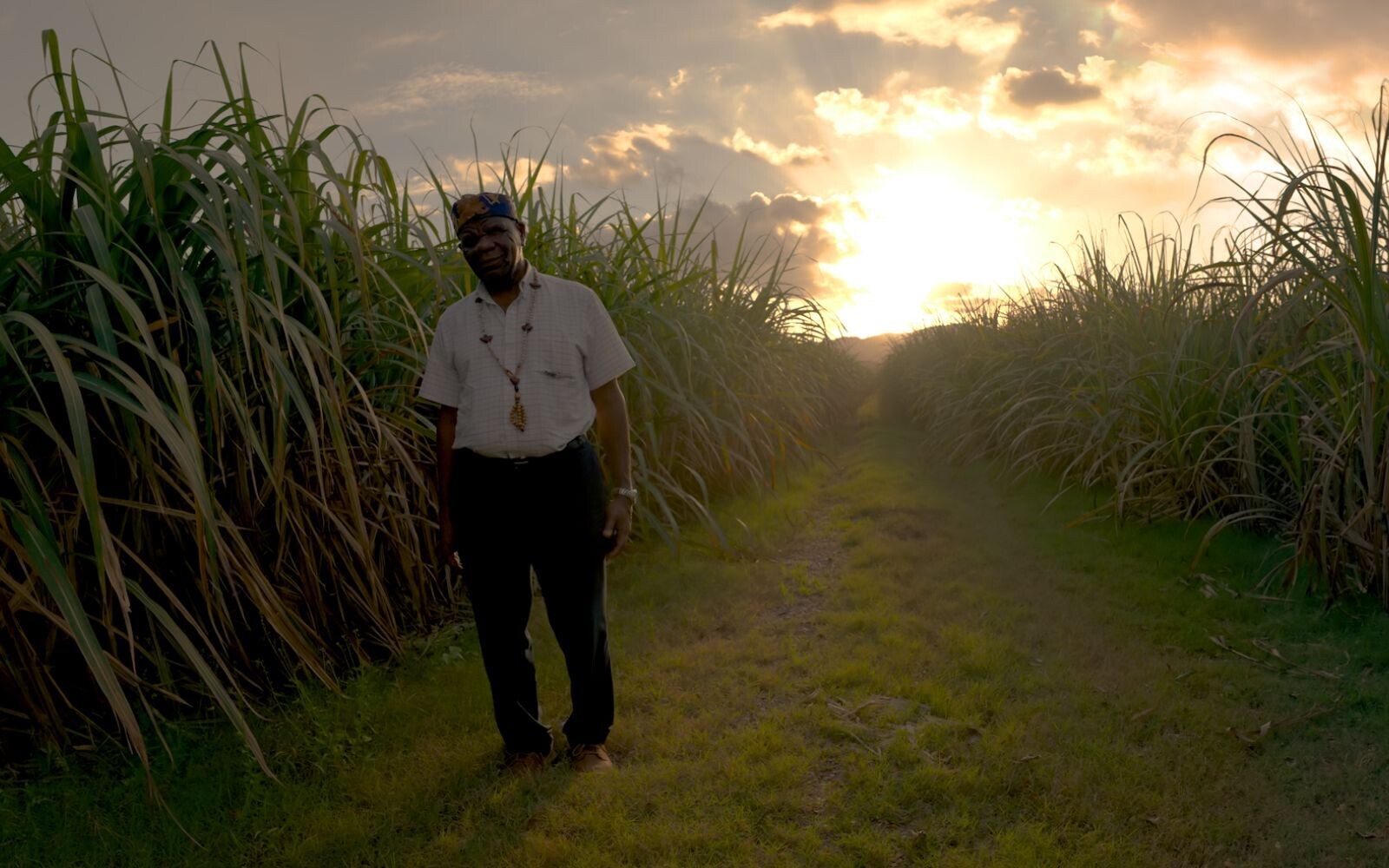 Camille Turner, Worthy (production still) multi-channel video installation, 2026. Courtesy of the artist. Produced with support from the Art Gallery of Hamilton.
Turner's piece Nave, which draws on the slave ship research, is what helped Bennett figure out how to move visitors through the different performances, eras of Turner's life, and topics. The gallery also funded a trip so Turner could visit Jamaica with her father and finalize a pitch to the Canada Council for the Arts for the exhibit's final piece: a panoramic shot of a Jamaican plantation, narrated by her father's voice, describing how his family was removed from their home to build a golf course when he was nine, the same age Turner was when she immigrated to Canada.
The Art Gallery of Hamilton also brought on a Black Educator in Residence, Stylo Starr, an artist who leads tours of the show and offers her perspective as an artist, a Black person, and a fan of Turner's. The gallery produced a book too, published by Goose Lane, with essays from Black scholars including Rinaldo Walcott, Michelle Jacques, Andrea Fatona, Honor Ford-Smith, and Nataleah Hunter-Young, exploring Turner's history and reaching beyond what's on the gallery walls.
On being a Black Canadian, Turner offers a line from Canadian author Dionne Brand: "To live in the diaspora is to live as a fiction." Turner adds, "Those words cut, but in a lot of ways it feels like I could totally relate because that is the feeling. It's living in a world that we're told doesn't exist, and yet we're living it. We're here."