 By
By Two-time Juno award-winning singer-songwriter Lala Noel never saw this coming. A few years ago, if you'd told her she'd one day break her grandmother's heart with the news that her new favourite artist wasn't a real person, she'd have assumed you were pitching a movie.
Today it's as routine as the headlines gen AI drums up every week:
AI copycats of Canadian novels surface on Amazon.
Edmonton-born rapper finds 129 of his songs in datasets used to train AI.
Xania Monet becomes the first AI "musician" to chart on Billboard.
Canada launches its first national AI strategy with no mention of copyright protection for artists.
While many artists across Canada are watching AI closely, Black artists have more reasons for concern. More than half of Black Canadian professionals already report discrimination at work and feel their skills are undervalued, according to a 2023 Future Skills Report. So swapping out Black creatives with AI alternatives only gives this country, with its long anti-Black history, another excuse to undervalue their art.
To dig more salt into the wound, gen AI models have been criticized for getting their mojo from Black creatives themselves. Outside of Canada, Black artists like SZA have called out how gen AI disproportionately trains on the “best and brightest Black minds.”
Training on Black art means you can replace real Black artists with passable knockoffs and generate all the writing, artwork, music, and audiovisual content you need for free. No hungry artist waiting for a check on the other side. That’s what AI companies are already discovering with “Black-inspired” AI soul, gospel, and RnB acts.
“It’s kind of a modern day minstrel scene in a lot of ways,” says Lala Noel. To her jazz-trained ears, AI creations are “formulaic [and] characterized imitations of the real thing. It’s like white people trying to interpret what they believe a Black person would say or do or believe.”
AI “musician” Sienna Rose’s early 2026 rise to fame is one such example. The anonymous avatar reached millions of monthly Spotify listeners after evolving from a red-haired Caucasian woman to a Black neo-soul artist with a fro. While the avatar’s early album covers have since been taken down from Spotify, they remain on Tidal.
Another example is UK producer duo HAVEN’s viral 2025 track “I Run”, an AI-assisted song with uncredited vocals eerily close to Black UK singer Jorja Smith. After Smith’s label issued copyright takedown notices, the AI version was removed from streaming services, withheld from Billboard charts and re-recorded with Kaitlin Aragon. But the shameless attempt to exploit Smith’s sound without credit or compensation only proves Lala Noel right: “A lot of AI songs and Black “artists” that have become very popular very quickly do not have Black people behind them.”
In this increasingly AI-forward Canadian music scene, Noel has also noticed a difference in how professionals engage with Black art. “It feels like there’s more competition now, [it’s] just not human.”
Some of this non-human competition may come from gen AI models that have potentially been trained on Noel’s own work.
Back in 2025, Music Publishers Canada’s CEO announced that “nearly every song ever written by a Canadian songwriter has already been scraped and stolen by these AI companies without consent, credit or compensation.”
In a recent interview with Canadian Press, Polaris Music Prize winning rapper Cadence Weapon says he found 129 of his songs in datasets used to train AI music generators.
That theft hits even harder when you think of the legendary Black Canadian musicians like “Canada’s first lady of the blues” Salome Bey and jazz trailblazer Oscar Peterson, whose boundary-pushing art platformed Black Canadian culture, and likely has also been trained on without fair credit.
“There’s this age-old generational understanding that the white people here are different than the States,” says Noel. “There are obviously differences, but there’s also very clear similarities in the ways Black people are disenfranchised and systematically made to feel and be inferior, and I think that extends to art in what gets put at the forefront both musically and otherwise.”
That systematic bias is clear when you crunch the numbers. In spring 2024, a Hill Strategies Research survey found that 85% of IBPOC (Indigenous, Black, and people of colour) artists reported financial stress in their careers. Only 64% of their white counterparts said the same. While the research didn’t cite whether artificial intelligence factored into that stress, being nearly one and a half years into AI’s launch likely didn’t help either.
“There’s a reason why they call us starving artists. They say [art] is the career you go into when you don’t want to have money or to pay your bills,” jokes Edmonton-based Nigerian multidisciplinary artist, Latifat Busari, who saw the writing on the wall when OpenAI first launched ChatGPT in November 2022.
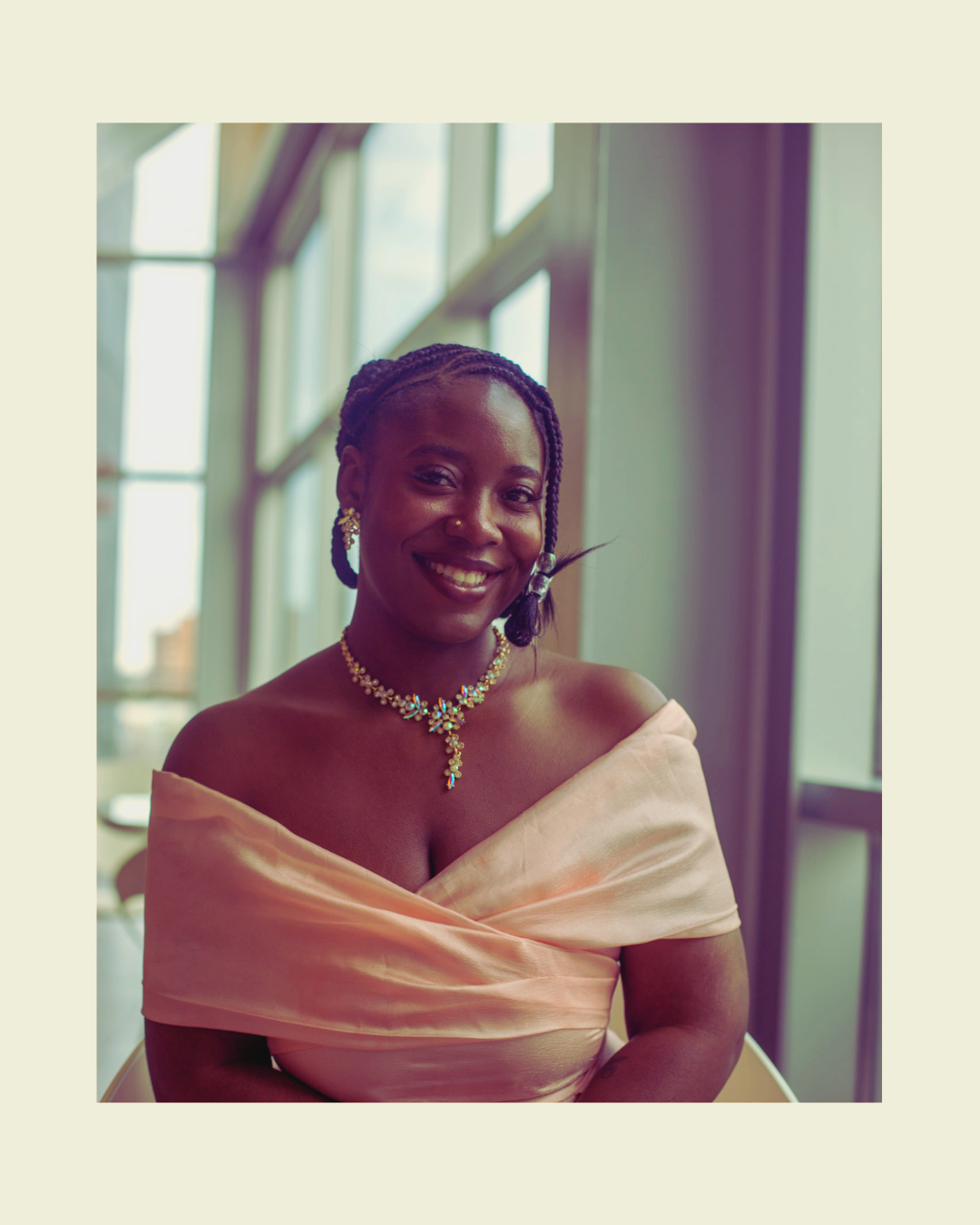 Latifat Busari. Photo: Jeave Crumb. IG: @jeaves_eye_view
A published written and spoken word poet, Latifat says, "They've cut funding for the arts in such a massive way that it's hard for people to hire talent. If you're not as multi-faceted, if you don't have as much experience—even when people have that, they still don't get access to jobs or projects."
The federal numbers back them up. A 2025 report from the Canadian Chamber of Commerce's Business Data Lab found Ottawa's spending on arts, culture and heritage slid from $4.64 billion in 2023–24 to $4.53 billion in 2025–26, dropping to 0.93% of total federal spending from a full 1%. Then this past May, Michelle Chawla, Director and CEO of the Canada Council for the Arts, told the sector in an open letter that the Council was heading into the new fiscal year with nearly $10 million less. She called the decrease permanent. The Council is the only federal body that gives arts organizations ongoing operating support, which is the money that covers salaries.
The economics make the squeeze harder to justify. The same Business Data Lab report found arts and culture contributed $65 billion directly to the economy in 2024, and that the sector has outpaced growth in oil and gas, wholesale and retail trade, construction and manufacturing since 2011. Two per cent of the country's GDP, and the organizations behind it still can't afford to keep people on payroll.
Latifat has seen AI companies swoop in, promising to lighten the load of creative work for projects and says “people eventually give in because sometimes they’re in the middle of a project and then the funding is just gone.”
The federal government’s national AI strategy: AI for All arrived in June without mentioning copyright even once in the entire 50 page document. What the strategy does offer creators is $50 million through a Creative Technology Program to help them adopt AI, which answers a question nobody was asking. The one artists keep asking, whether a company can scrape your life's work without consent, credit or a cheque, remains open, because there is still no requirement that AI developers disclose what they trained on.
Art created in real-time or in community, such as in live shows, slam performances and exhibitions, is where Black artists still have AI beat. By a wide margin. That’s what Latifat discovered when they cofounded two collectives, the Black Femme Poetry Collective and The Grief Collective. Their in-person events have become a space for fellow Black creatives and artists of colour to feel, grieve, and create art together, and every meet makes this fact clearer: “people want to connect with each other so badly.”
This same truth is why Lala Noel doesn’t believe AI deepfakes can replace her, or Black artists, just yet. “Real, timeless music [will always] cut through” and AI is no match for “soul-filling” live moments.
Remembering their reason for making art in the first place also helps keep Black artists like Latifat and Noel fighting in what can be a hostile environment. “Before I ever thought to put my art into something that could pay me, I just wanted to create,” Latifat says. This sentiment is echoed by Montreal-based Haitian-Canadian textile artist Stina Baudin, who says “I don’t necessarily do it for the money, I do it because I need to do it. ”
After getting a first degree to fall back on, Baudin went back for her Masters of Fine Arts. “I could no longer ignore the signs of how much I loved it. I wanted to learn so badly and it took a while to get to that, to stop denying that to myself.”
The type of art Baudin makes is itself largely gen-AI resistant, as her award-winning tapestries or “historical mappings” take time. And a lot of it.
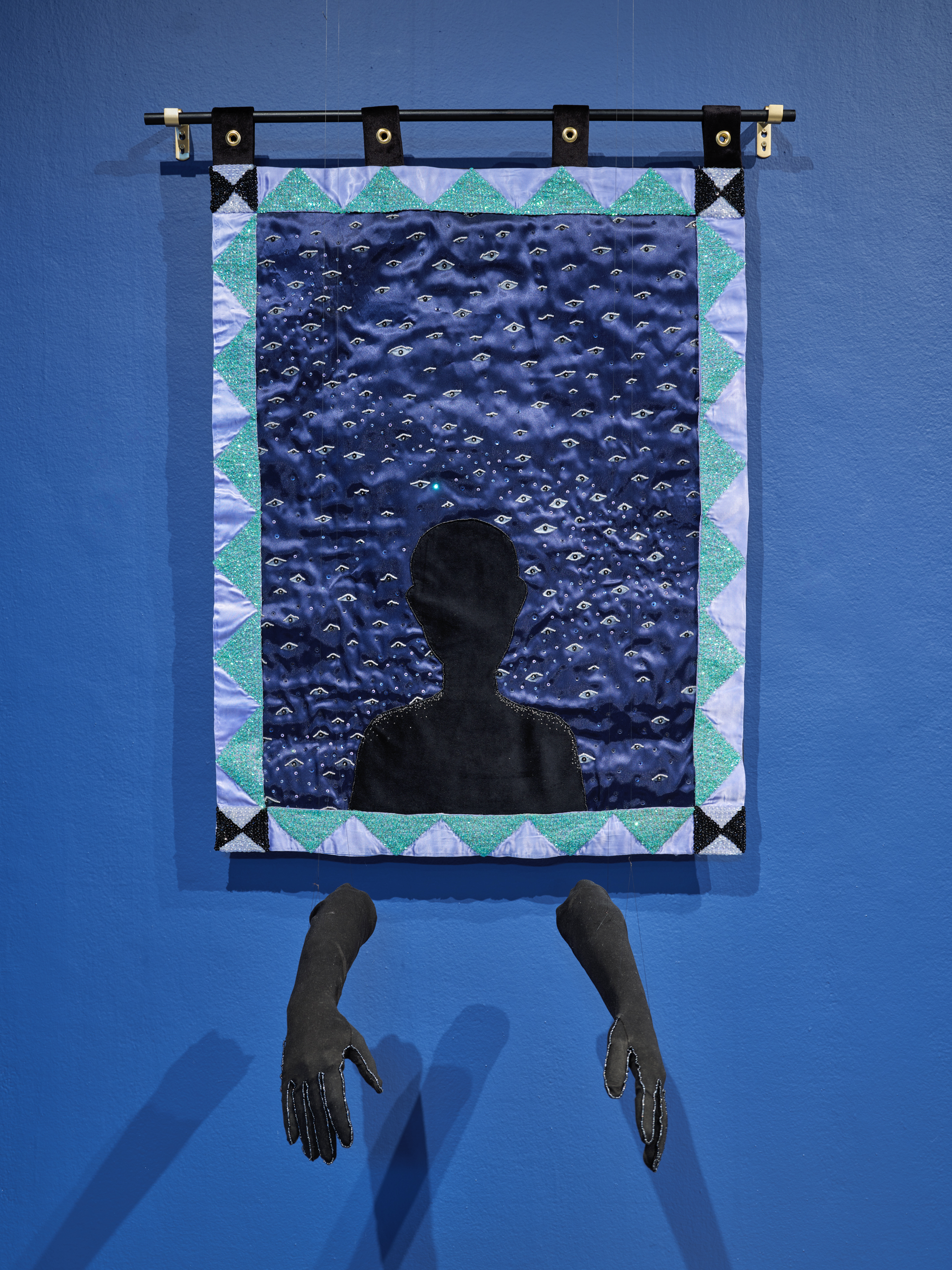 Baudin’s piece: Ou genyen je o/Ou genyen je o, chéri/Pou we tout bagay. Photo by Dennis Ha.
Her beadwork alone takes anywhere from three months to over a year, and her textiles are hand-stitched, dip-dyed, and waxed. “I work really slowly and I don’t want to speed up work for the purpose of sales.”
This slow art is deeply Black and ancestral, Baudin says. A direct bridge to how Black and African communities have always made art. Nothing like quick AI art, which Baudin describes as “ugly and soulless”. And soul is exactly what makes Baudin the artist that she is.
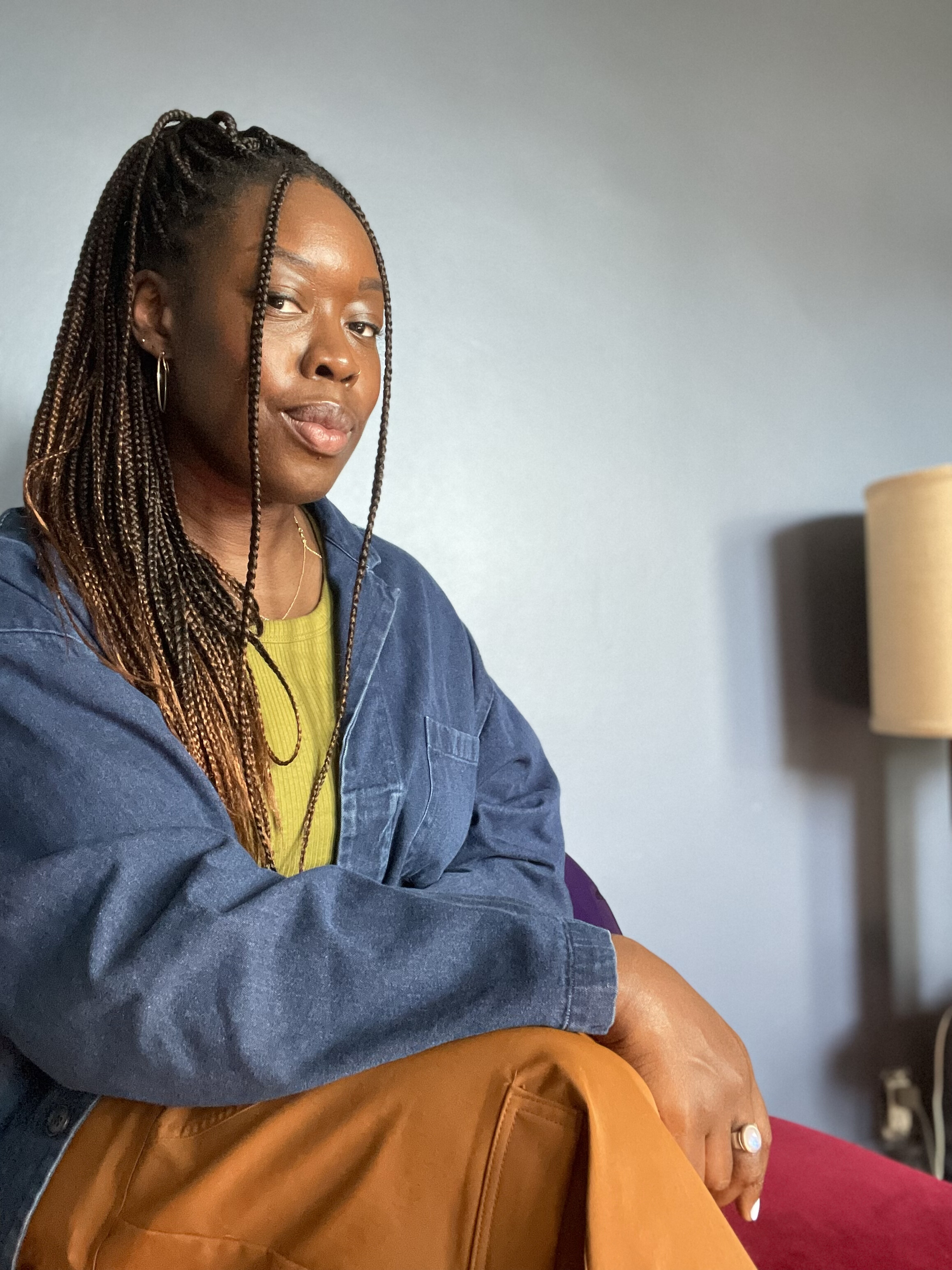 Self-portrait: Stina Baudin
Black-centred art spaces and mentorship have been key for Baudin, particularly at the start of her career. Her very first artistic residency was with Wildseed Centre, a Toronto space for Black artistic experimentation, and that one leg up spurred more residencies and opportunities.
While Black spaces make a big difference for artists like Baudin, so do Black audiences. In an AI-influenced labour market, keeping Black creatives in the game can be as simple as going to see their work.
The challenge for Baudin is often getting the word out. “It brings me so much joy when Black people are in the audience,” Baudin says. “The work is FUBU [for us, by us] but it’s not always feasible because they’re often [featured in] white spaces.”
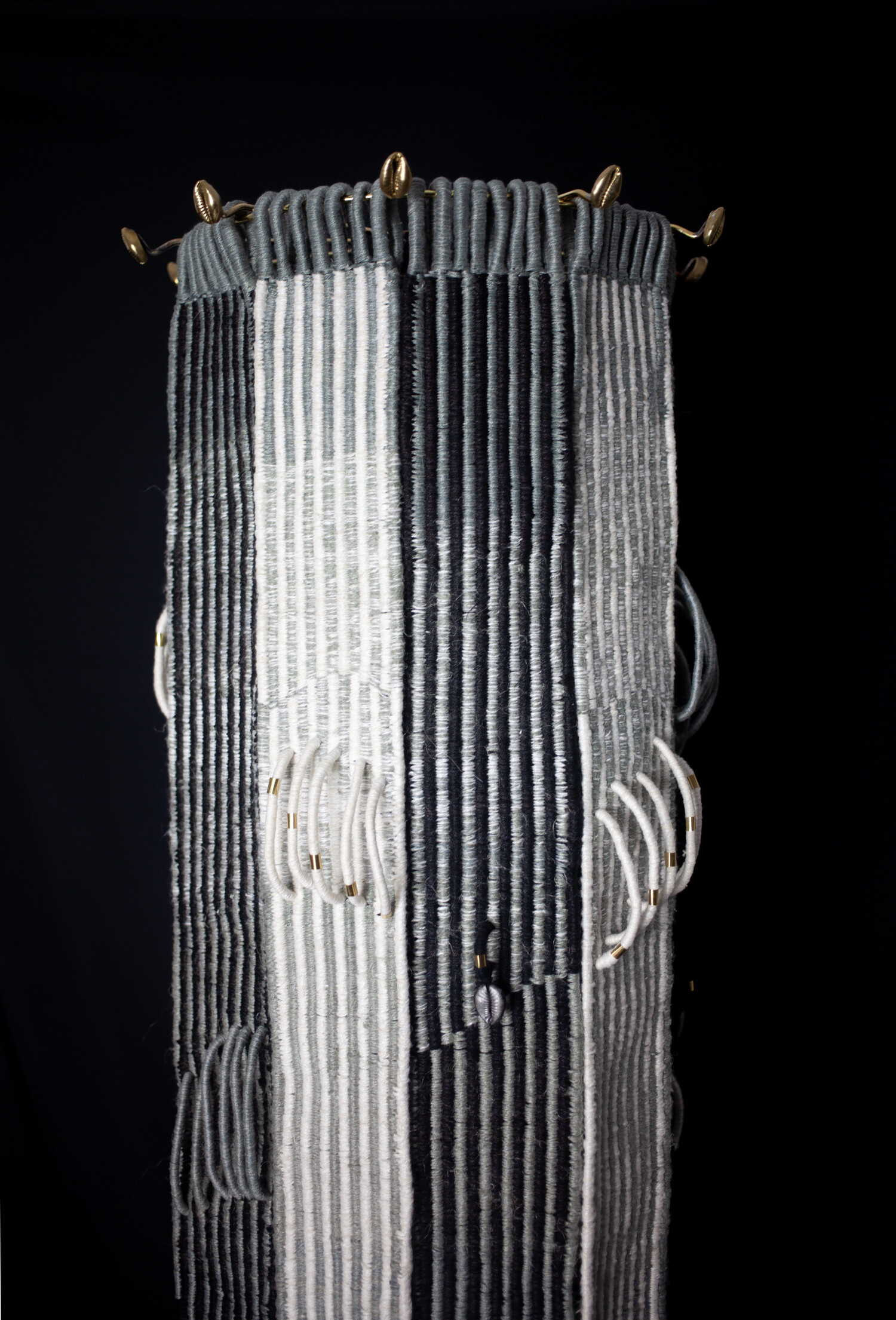 Internal Algorithms (Listen to your ancestors, they have all the answers). Photo by Stina Baudin.
Many people also don’t understand the danger in supporting Black-inspired AI creative work instead of real Black artists. Latifat believes more awareness could change that. “People don’t know enough about the art world. They have no connection to the art community,” says Latifat. “I think that, moving forward, the more we can educate people, communally and individually, would really help reduce the impacts of AI and help them actually pay artists."
Structured support from the Canadian government wouldn't hurt either. Canada's arts council funding sits at $9.10 per capita against $21.50 in the U.K. Ireland went further, with a pilot program that paid 2,000 artists €325 a week for three years and then commissioned an independent analysis to see whether it was worth it. The finding: €1.39 returned to the economy for every €1 spent, through taxes, spending and lower welfare costs, with total benefits topping €100 million. Ninety-seven per cent of the Irish public wanted it made permanent. It was.
There are 6,400 Black artists in Canada, 1,300 Black arts leaders and 26,500 Black cultural workers, according to Hill Strategies' analysis of the 2021 census. That same analysis found racialized people hold 27% of jobs in the Canadian labour force but only 19% of artist roles and 16% of arts leadership roles. The closer you get to the work, and to the decisions about the work, the fewer of us there are.
Black artistry is already the cultural heartbeat of what this country listens to, according to a 2024 study by ADVANCE, Canada's Black Music Business Collective, and Toronto Metropolitan University's Diversity Institute. It has been paying out to everyone but the people who made it for a long time. AI just found a way to skip them entirely.
We need to protect Black art before there’s nothing left to protect.