 By
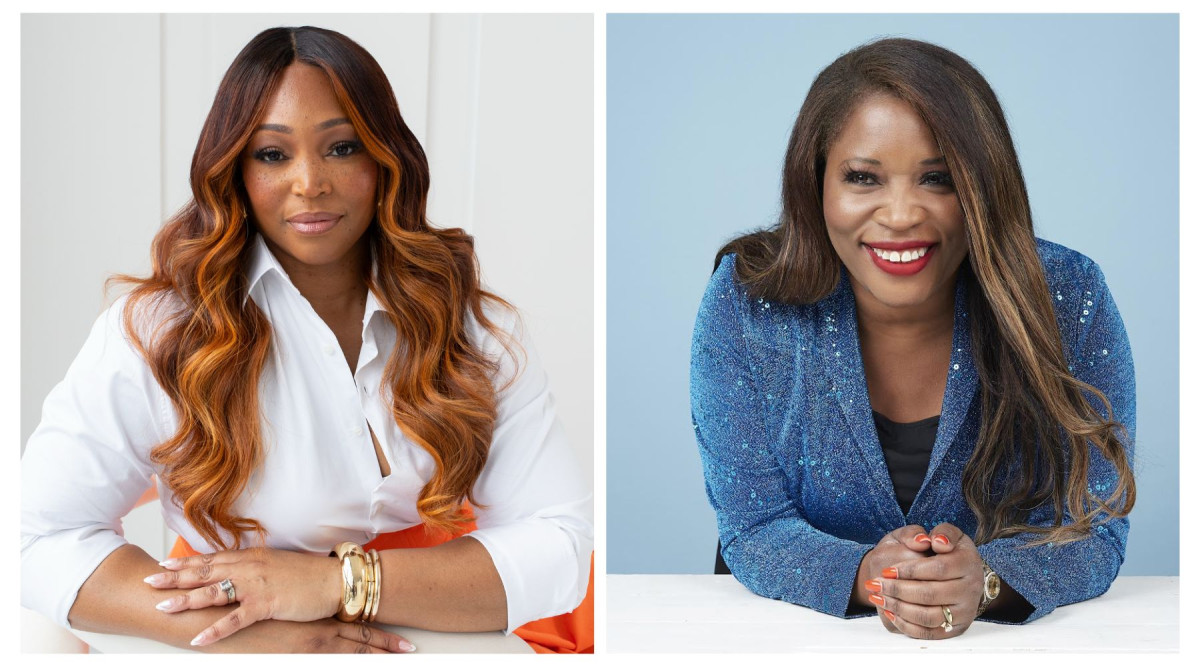
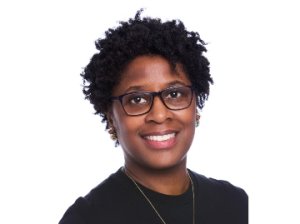
By Moore spent sixteen years inside Canadian homes as the host of Cityline, becoming one of the country's most recognizable television personalities while quietly reshaping what mainstream Canadian media could look like. While McGowan built a career at the forefront of cybersecurity and digital transformation before launching Protexxa, her own cybersecurity company, and co-founding The Firehood, an investment network supporting women in tech.
Two very different worlds, held together by the same discipline: learning how to translate yourself for rooms that weren't built for you.
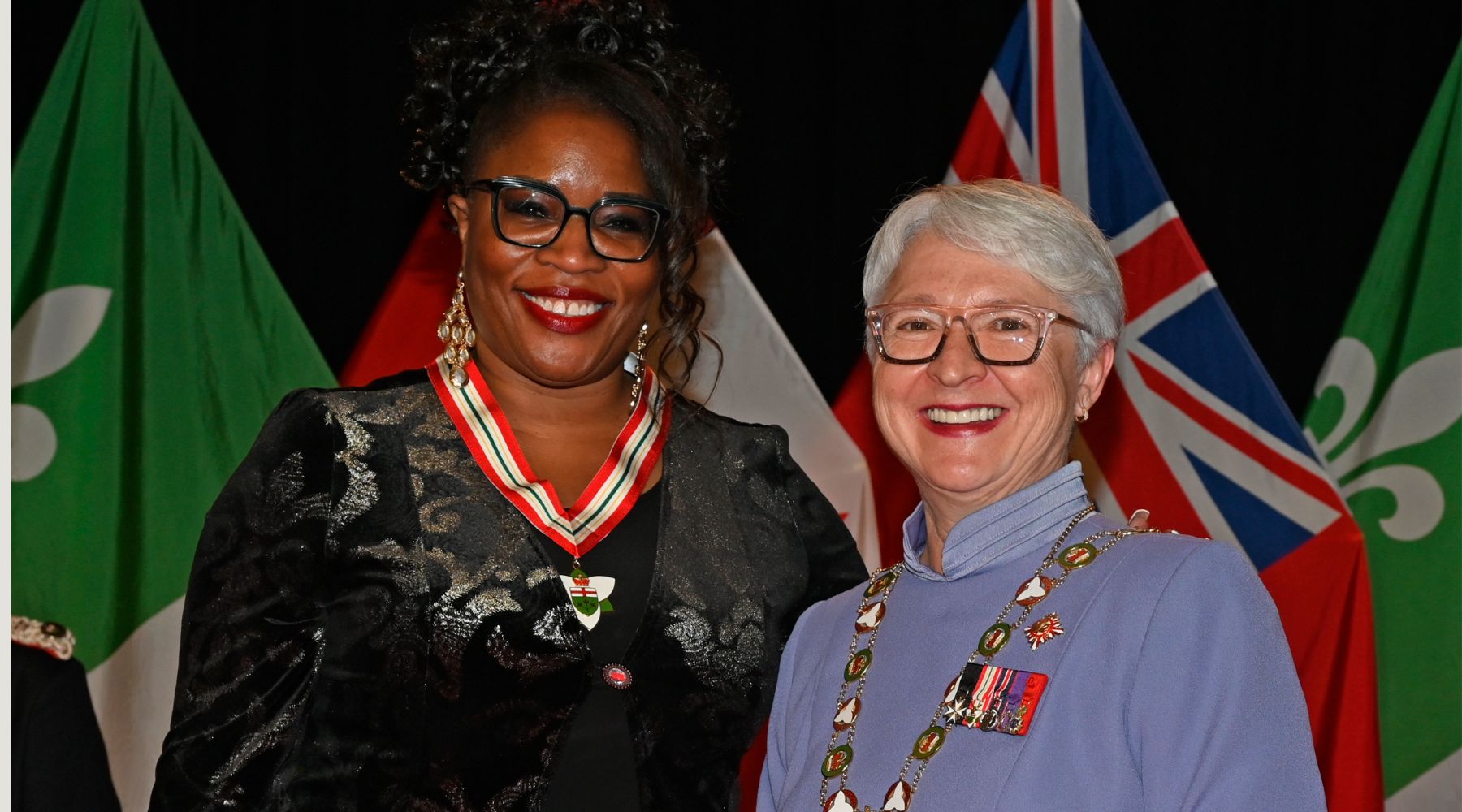
This year, they were named to the Order of Ontario, the province's highest civilian honour, alongside figures like Cameron Bailey, Don Cherry, and Edward Rogers. The award recognizes people whose work has strengthened Ontario socially, culturally, and economically.
"I need to tell my mom"
When McGowan got the call about the Order of Ontario, prestige wasn't the first thing on her mind.
"I thought about my parents," she says. "The fact that they came here to make a better life. I felt like I really needed to tell my mom."
Even after decades inside some of Canada's most powerful institutions, Deloitte, TD Bank, BMO, McGowan doesn't talk like a corporate executive. She talks like someone motivated by utility and being in service to others. She originally wanted to work in medicine before realizing technology offered another way in.
"I was helping and healing," she says, "but in a digital way."
She frames cybersecurity as infrastructure for survival, especially for communities navigating surveillance, disinformation, and digital exposure. "Think of it as your digital house," she explains. "You need to have access to the keys. You need to know what's in every room."
For her, the real issue is ownership. Of data, of access, of narrative, of self. It's also how she describes what entrepreneurship actually gave her.
"The freedom for me came when I was able to own the logo versus rep the logo."
There's a ceiling many Black professionals eventually hit inside institutions where proximity to power stops being enough. McGowan hit it and went around it. Founding Protexxa, a name that came to her on a car ride, feminine by design and protective by intent, her software leverages AI to democratize cybersecurity access for organizations and people to protect themselves digitally. While other technologies focus on protecting hardware devices and networks, Protexxa focuses on protecting people.
She describes nonprofit organizations relying on "a nephew or niece" to manage cybersecurity because they can't afford dedicated tech leadership. Through Protexxa and The Firehood, she helps women founders understand fundraising mechanics, valuation, and investor readiness before they walk into rooms designed to expose what they don't yet know.
"Why not create programs before you're pitching?" she says. "Here's what a pitch deck should look like. Here's what a data room is."
Ask where the work gets hard, and she doesn't hesitate: fundraising. That's where warm boardroom handshakes give way to the cold math of who gets capital. "You hear way more no's than yeses," she says. "You have to have broad shoulders. And it's especially not easy for women."
She also pushes back against assumptions of constant hostility in white-dominated spaces. Carefully, but firmly. "I've had a lot of support," she says.
Black professional life in Canada is often more complicated than the country's preferred binaries of multicultural success or overt exclusion. McGowan, currently pursuing a PhD in Computer Science at Toronto Metropolitan University while running a global company, isn't interested in either easy ending.
The yawn in the car
Moore is disarming in person, warm and funny, but a sharply direct communicator. She admits she’s in unfamiliar territory right now. Cityline was cancelled in 2024. A follow-up show collapsed in early 2025. She's navigating the kind of open water that few people who've spent two decades as a public institution are ever allowed to admit they're in. She admits it freely and leans into it.
"There is so much I muted in that role that I am every week discovering more," she says of her sixteen years hosting Cityline. "2025 has been a completely revelatory process — exploration, stillness, curiosity, and a lot of inner work."
She describes living in near-constant hyper-vigilance on television, monitoring her facial expressions, body language, and tone with exhausting precision.
She was in her car on the highway, running the usual circuit of kids' hockey schedules and parents' doctors' appointments, when she yawned. Not a polite, closed-mouth yawn. A full, lion-in-the-Serengeti yawn. Then she caught herself doing it. She had been, in her own sealed vehicle, self-editing for a perceived audience of drivers in other cars who weren't even looking at her.
"That's how hyper-vigilant I've been about my actions," she says. "And so, there's just this liberating freedom happening with every little inch of data that I pull from myself about who I really am."
The price of the mainstream
Early in her tenure at Cityline, Moore says executives pressured her to change her hair. The argument was that viewers across Canada should want to emulate her appearance, and her natural twists were not it. What began as gentle suggestions escalated into coordinated lunches and white experts summoned to take her wig shopping at salons that primarily served chemotherapy patients.
The pressure was coming from white male executives above the white female bosses who delivered the message. She complied, and her hair has never recovered. "I have traction alopecia," she says plainly. "My hairline is a ragged mess."
Canada likes to believe its racism is softer, gentler, less invasive than elsewhere. Moore doesn't bother arguing with that. She just tells you what happened to her hairline.
Throughout those years, she remained acutely conscious of who was watching. "I was aware of my Black audience every second and every minute of every day." That awareness shaped everything from beauty conversations to fashion segments to the eventual hiring of Black hairstylists. Moore understood representation as responsibility, not branding.
She studied political science at McGill and completed a master's in journalism at Western. She genuinely wanted to be the next Christiane Amanpour. "It was important for me that people know I'm smart," she admits, recognizing now how much of that drive was a response to stereotype as much as ambition. Cityline reframed what smart could look like. "There are different ways to change the world," she says. "I can affect people in a different way, spread some joy, and then sprinkle in, by the way, there's racism, and see how that message lands."
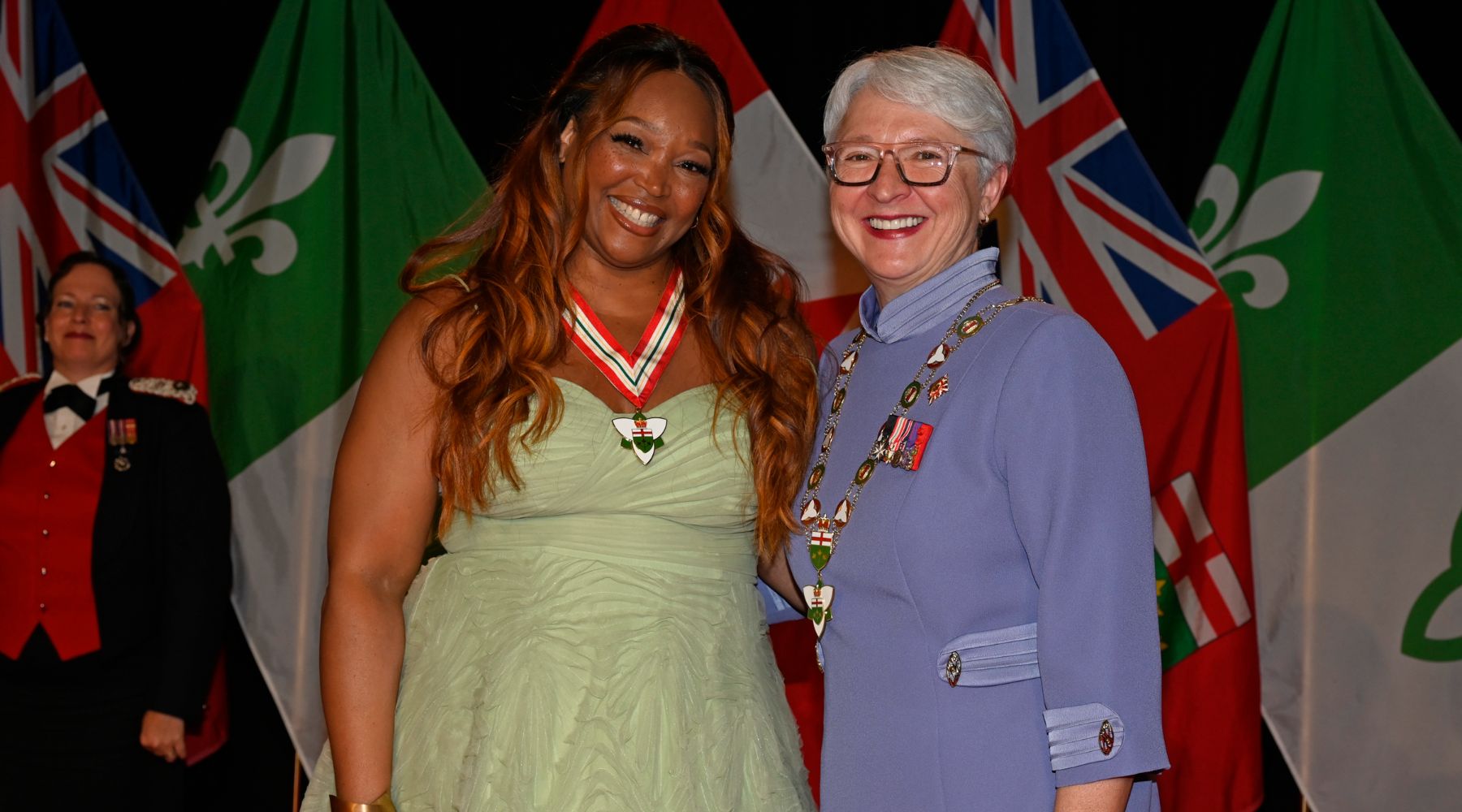
Her husband, Lio Perron, a former journalist who understood the industry from the inside, quietly coordinated the Order of Ontario nomination with two close friends. When Moore found out, her first reaction was, "Is this a scam?" Her daughter, watching from across the room, was calmly nodding. It was real.
For both women, the recognition lands as something steadier than validation.
For McGowan, the award has already done something unexpected. It collapsed the distance between ordinary life and extraordinary achievement for people watching from the outside. "I have friends who cried when they got the news," she says. "I was like, 'Why are you crying?' But it's so emotional." She gets it now. When someone you know receives recognition at this level, it makes the thing feel possible in a way it didn't before.
Ten years from now, she hopes to see more people who look like her on lists like this one, not because visibility is the destination, but because it signals the depth of a pipeline that already exists. "I'd like to see the impact through others," she says.
Moore moves through her days with no exact plan and, for the first time in decades, no idea what's next. She sounds unbothered by it. "I'm free as a bird," she says. "The only thing I know for sure is it's going to be good."
She's clear about how she wants to be remembered. Not as a celebrity on a pedestal, but as proof of something reachable. "I want people to say, I can do that. I can feel that way. I can love people unconditionally."
The recognition, in her view, belongs to everyone who ever saw themselves in her.