 By
By The question isn’t why there are so few Black women in Canadian comedy. The question is: why does the industry keep acting surprised every time one breaks through?
By now, a pattern is obvious enough to have a name. A Black woman grinds for a decade, builds a following, earns her stripes on stages from Toronto to Beijing to Edinburgh (we see you, Tamara Shevon), and only then does the Canadian establishment take notice. Not when she was ready. When they were ready. And usually only after someone outside the country said so first.
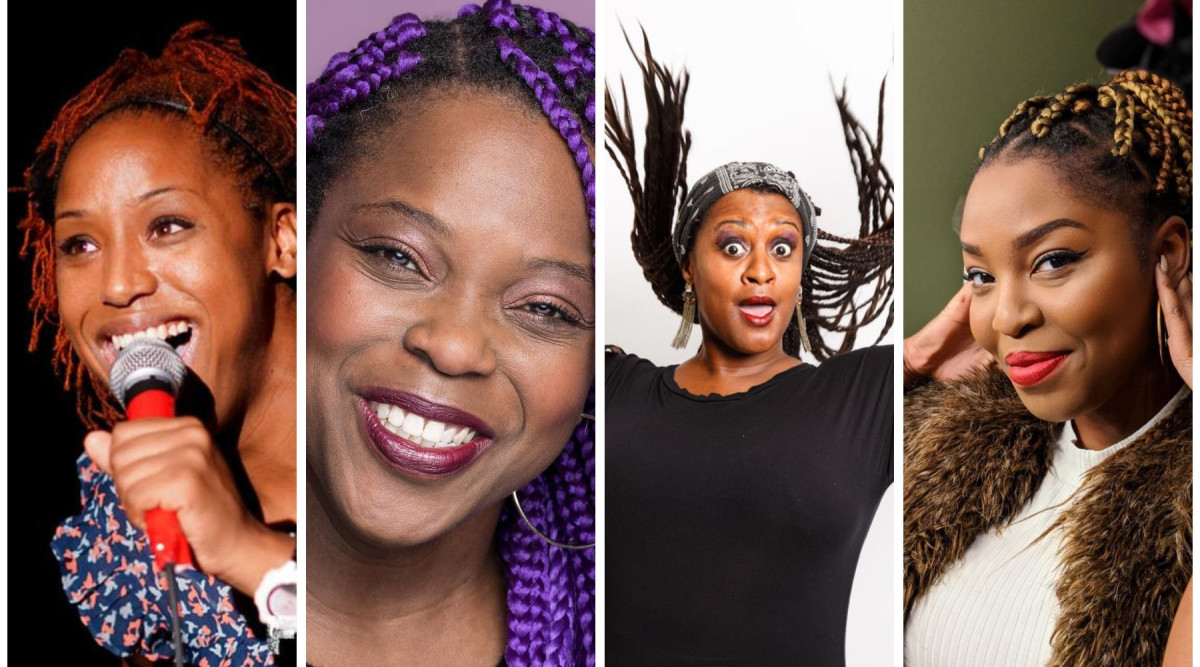
To understand how this works, I sat down with four Black female Canadian comedians to talk about what it actually feels like to build a career inside a system that doesn't quite see you, until it suddenly needs you.
Zabrina Douglas (whose comedy album Things Black Girls Say received a Juno Award nomination for Comedy Album of the Year in 2023, Aba Amuquandoh (of This Hour Has 22 Minutes, the first Black woman on its main cast), Dana Alexander (a Canadian who moved to the U.K. and quietly became one of the busiest comics on that circuit), and Tamara Shevon (a 13-year standup veteran, who cut her teeth in China and now teaches at Second City) — collectively, their careers form a portrait of a system with a gatekeeping problem it keeps mistaking for a pipeline problem.
Who gets to be “relatable”?
The word “relatable” does a lot of quiet work in the comedy industry. It sounds like a compliment. But it functions like a border crossing. It’s the stamp in the passport that decides which jokes are “for everyone” and which get waved off to the margins as “too specific,” “too niche,” or “too urban.” For Black comics, “relatable” doesn’t describe a shared human experience; it describes how smoothly you can pass through someone else’s checkpoint.
“Relatable always refers to the white gaze,” says Tamara Shevon, with the clarity of someone who has turned this observation over many times. “When they say something’s relatable—especially for Black women, it means you’re not making them uncomfortable. You’re catering to them, which is the opposite of what it’s supposed to be.”
{https://www.instagram.com/p/DWHPeyHgH0R/}
In practice, that means the barometer for success isn’t whether Black audiences see themselves; it’s whether white audiences see themselves seeing you. The pressure is always to translate, to soften, to pre-explain, to sand down the sharp edges of culture and history so the joke can slip easily into a room that was never built with you in mind.
Sadly, the definition doesn’t just shape what gets laughs, it shapes what gets made. And the broadcast record bears it out. Comedy specials and traditional Black sitcoms in Canada remain few and far between, and when they do get made, they rarely last. Lord Have Mercy! (2003) ran one season on Vision TV and networks like Toronto One, APTN, and Showcase. Da Kink in My Hair (2007)—the first sitcom on a major Canadian network created by and starring Black women—ran for two.
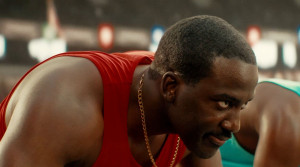
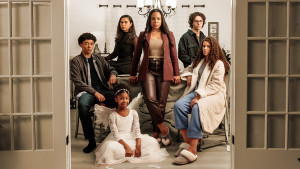
What followed moved elsewhere. Web-first series like Revenge of the Best Black Friend (2022) and Bria Mack Gets A Life (2023) began filling the gap, proof that when gatekeeping eases, the definition of “relatable” expands. And more recently, Hate the Player: The Ben Johnson Story (2026) continued the trajectory.
Aba Amuquandoh describes the arithmetic of this in stark terms. White performers on shows like This Hour Has 22 Minutes, she says, “get to be understood immediately — there are no preconceived notions of what you’re going to say or what you’re allowed to say.” She, by contrast, is always triangulating what will land with a live audience that may not know the references she’s making; what will be edited by someone further up the chain; what the show, the country, and the industry will accept from someone they’ve chosen to represent an entire community.
{https://www.instagram.com/p/DUG_3wsEZ_e/}
“I don’t get to be relatable,” she says, “because people don’t have to pay attention to what is relative to me.” She traces that realization to an Uber driver in Halifax who told her he didn’t “even see Black people.” A casual confession that explains everything. Invisibility isn’t hostility, but it arrives at the same result.
The overqualification trap
There is a particular exhaustion that comes from being very, very good, and still not enough. Dana Alexander felt it from her earliest years at Yuk Yuks, where she was reliably sent to open new venues because they knew she could get the job done. “If it was a new venue, I was usually the first one to do it,” she says. “And it was annoying, because they knew I was a reliable comic. But when it came to bigger opportunities, like my Comedy Now special, they would never put me on a showcase.”
{https://www.instagram.com/p/DPl42JxCCzS/?hl=e}
So, Alexander sent her tape directly to the producer. Got the special. And then, astonishingly, her own agency came after her for commission. “They had the nerve,” she says, borrowing the language of The Little Red Hen: no one wanted to help plant the corn, but they all showed up to eat.
Aba Amuquandoh joined This Hour Has 22 Minutes in 2020 as the first Black woman in its 28-year history—cast only after departing member Susan Kent urged producers to “hire a woman of colour.”
Zabrina Douglas, who has been doing stand-up since 2005 and holds a Juno nomination for her album, still works as a nurse because the Canadian comedy infrastructure doesn’t offer enough runway to those who don’t leave the country.
{https://www.instagram.com/p/C6aN4HQNTa4/}
“A lot of comics, they left their day job, and that’s when they found success,” she says. “But in Canada, just as a comedian, you’re not making any money.” She has five children. She is, by every measure, excellent. And she is also grinding in conditions that a white male peer would have been spared years ago.
Amuquandoh frames this with characteristic precision: “We only notice Black women once they’re already exceptional.” She compares it to American actress, comedian, writer, and producer Quinta Brunson, best known for creating and starring in the ABC comedy series Abbott Elementary.
She was already beloved by online communities for over a decade before the mainstream caught up. “She should be as big as someone like Amy Poehler,” Amuquandoh says. “But people don’t want to bank on you until you prove you can bring in money and views.”
The U.K. mirror
While Canada was still figuring out whether Black women were “relatable” on mainstream comedy, the U.K. was decades into a different conversation.
No Problem!, the first sitcom to centre the Black British experience, aired on Channel 4 in 1983. It ran for two years (27 episodes) and was later voted one of Britain’s top 100 sitcoms in a BBC poll.
{https://www.youtube.com/watch?v=m0YLxyaviMk}
Desmond’s followed in 1989: with 71 episodes, it became Channel 4’s longest-running sitcom in terms of episodes produced, pulling an average of 3.5 million viewers per episode and winning Best Channel 4 Comedy.
{https://www.youtube.com/watch?v=8uAPK7livSY}
3 Non-Blondes, the first U.K. sketch show to feature an all-Black female cast, aired on BBC3 in 2003 and was named one of the 50 funniest British comedy acts by the Observer. Breakout star Jocelyn Jee Esien went on to create and headline her own BAFTA-nominated sketch series, Little Miss Jocelyn, a landmark show that made her the first Black woman in the U.K. (and U.S.) to lead a solo TV sketch comedy.
From there, a new wave broke through: Mo Gilligan with his own Channel 4 show The Lateish Show and a global Netflix special, Michaela Coel earning worldwide acclaim with I May Destroy You, and a thriving Black British comedy circuit that has not only shaped culture but pushed the industry to evolve on its own terms.
Canada, by contrast, still feels like it’s workshopping its first Drake sketch.
The U.K.’s infrastructure made this possible: producers who deliberately sought Black voices, commissioners willing to take risks, and circuits that developed talent over time.
“It's not that we’re not here. It’s that we’re not noticed.” — Coko Galore, Artistic Director, Bad Dog Comedy Theatre
— As quoted by CBC Comedy, 2021
“When I went to the U.K. and did comedy out there,” Shevon observes, “I find that things are a lot easier for people to digest because there’s less of the polite racism that there is in Canada.” She pauses and clarifies: “The whole, ‘we'll just talk about you after you leave’ — it’s kind of the vibe of Canada.”
For Alexander, who has been based in London for nearly 17 years and now works across 63 countries, the contrast is structural. “There are probably four or five times as many comedy clubs in England as in Canada,” she says. In Canada, the logic flows in one direction: “If you want to be recognized, you have to be in the States, touring, or you leave.” And when you leave and succeed, Canada resents you for it.
“I think they resented me,” Alexander says, noting that after her U.K. credits landed, her Canadian agency demoted her billing and extracted her contact list. She walked away without hesitation, not bitter, just clear-eyed about the game and how to play it.
The February economy
Shevon has a bit she’s working on (one that isn't quite landing yet, but she’ll make it work) about the predictability of Black History Month bookings. Every February, the gates open. Every March, they close again. “No one cares to talk to anyone that’s Black until it’s Black History Month,” she says. “And then the minute February’s over, the gates are back up. We gave you that. That’s something you should be happy with. See you next year.”
This goes beyond performative allyship in the aesthetic sense; it operates as a business model. And it reveals something about how the industry thinks of Black women: as seasonal content, not as permanent creative assets. “When you restrict someone to a certain month,” Shevon says, “it shows everything you think about their talents.”
What "structural change" actually means
All four women agree that the solution isn’t more showcases, more diversity slots, or more February bookings. It’s about who is in the room making decisions.
The pattern is consistent: the people who decide which comedy gets made, which pilot gets a series order, which comedian gets a casting tape sent on their behalf— are overwhelmingly white. This isn’t an accusation. It’s an org chart. And an org chart is a policy.
Public data, industry reports and diversity analyses indicate that Black women are severely under-represented in the actual decision-making roles (such as commissioning editors, network executives, showrunners, senior production execs) in Canada.
At CBC, the national public broadcaster whose comedy slate includes This Hour Has 22 Minutes, Son of a Critch, and Workin' Moms, the commissioning chain looks like this:
- Sally Catto, General Manager of Entertainment, Factual & Sports, sits at the top of the programming structure and has held that role since 2014.
- Reporting to her is the Executive Director of Scripted Content, Trish Williams.
- The comedy development slate is overseen by Greig Dymond, Director of Development, Comedy, who has held the role since 2013, and whose credits include Schitt’s Creek and Baroness von Sketch Show.
- Sandra Picheca, Director of Current Production, Comedy, has overseen the production side — including This Hour Has 22 Minutes — since 2012.
- At Bell Media, which controls CTV and Crave, the country's dominant private broadcaster, commissioning decisions flow through Justin Stockman, VP of Content Development & Programming, who also leads Bell’s diversity and inclusion initiatives.
A 2024 diversity framework report citing Women in View’s 2023 On Screen Report found that Black women held only about 0.2% of directing positions in Canadian television during the period studied, underscoring a persistent reluctance to provide Black women with meaningful opportunities, even when their “talent and readiness are undeniable.”
Overlay that with workforce numbers: a Directors Guild of Canada census found that only 2.5% of respondents identified as Black, compared to roughly 3.5% of the population, and over 82% of members identified as white. That’s the pipeline feeding writers’ rooms, directors’ lists and showrunner rosters supplying “Canadian comedy.”
“We need Black women in rooms,” says Shevon. “They’re not in the right rooms right now. And I think that’s on purpose.” Amuquandoh would expand it further: more shows, more varied stories, and more willingness from audiences to actually show up and watch.
CBC has mandated that at least 30 percent of key creative roles on new commissioned series must be held by Indigenous, Black, or People of Colour individuals, a policy that, if enforced with teeth, could shift things over time. But policy isn’t culture. And culture is still lagging.
Douglas, who created Things Black Girls Say because she was tired of being the only Black woman on every lineup, found something electric when she finally built her own room: “Amazing — that is, to perform in front of Black women who understand your situation. I can do crowd work and talk about stuff they’d think about. It’s insane. So amazing.”
That electricity is not niche. That electricity is what happens when you stop asking Black women to prove they can translate themselves for a room that wasn't designed for them and start building rooms that actually fit.
“If it wasn’t me, it could have been 10, 20, 30 other really incredible Black comedians. So, it didn't feel like a breakthrough, because the groundwork had been laid by people who don't get enough recognition.” — Aba Amuquandoh, This Hour Has 22 Minutes
The irony, of course, is that all four of these women are funny. Deeply, undeniably, stratospherically funny. Canada didn’t discover that. They’ve always known. The question Canada has been avoiding, for 40 years while the British were busy watching Desmond’s, is simpler and harder: what does it say about us that we keep needing to be told?