 By
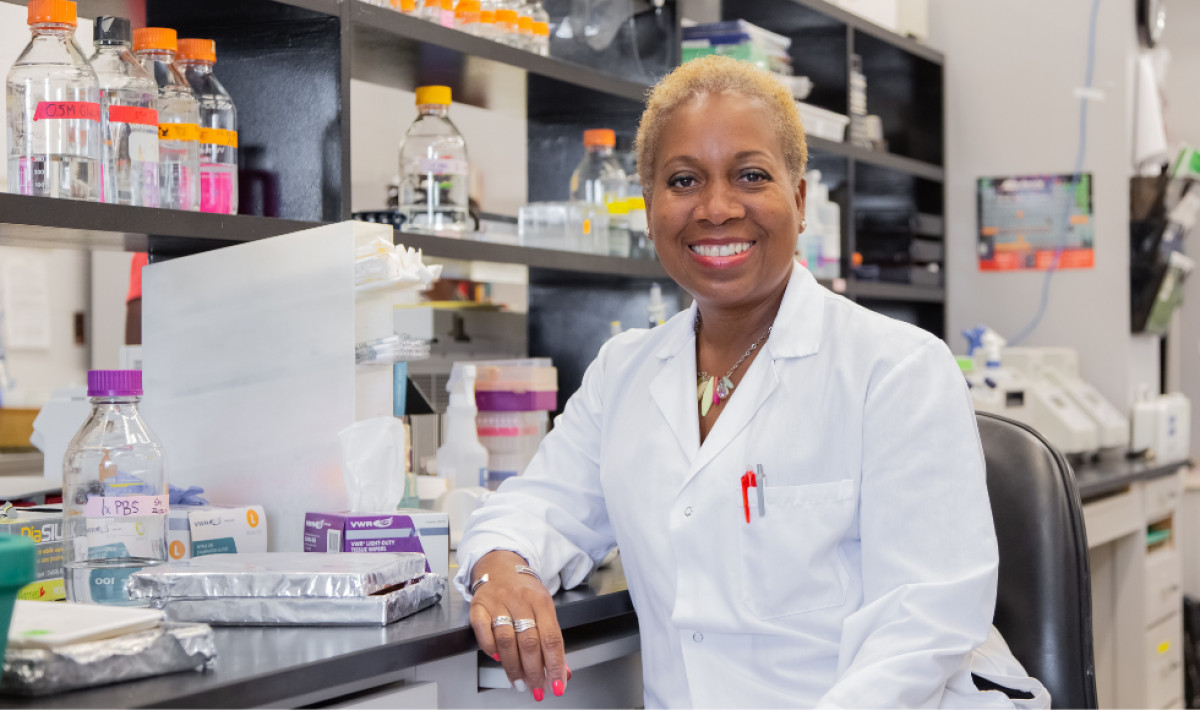
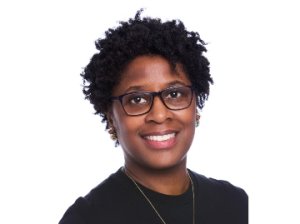
By Daniel was the first to discover a new gene that would become central to understanding one of the deadliest forms of breast cancer affecting Black women.
The bare facts of her career are formidable enough: more than 4,000 citations, a quarter-century of landmark research into triple-negative breast cancer, a procession of organizations she co-founded and causes she advanced by sheer insistence.
But to tell the story only through her résumé would miss the thing everybody remembers first: the force of her presence. The phone calls at midnight. The booming laugh. The way she could challenge you intellectually one minute, then make you feel completely at ease the next. To colleagues, she was Dr. Daniel. To friends, Juliet. To a trusted few, Jules.
 Supplied by McMaster University
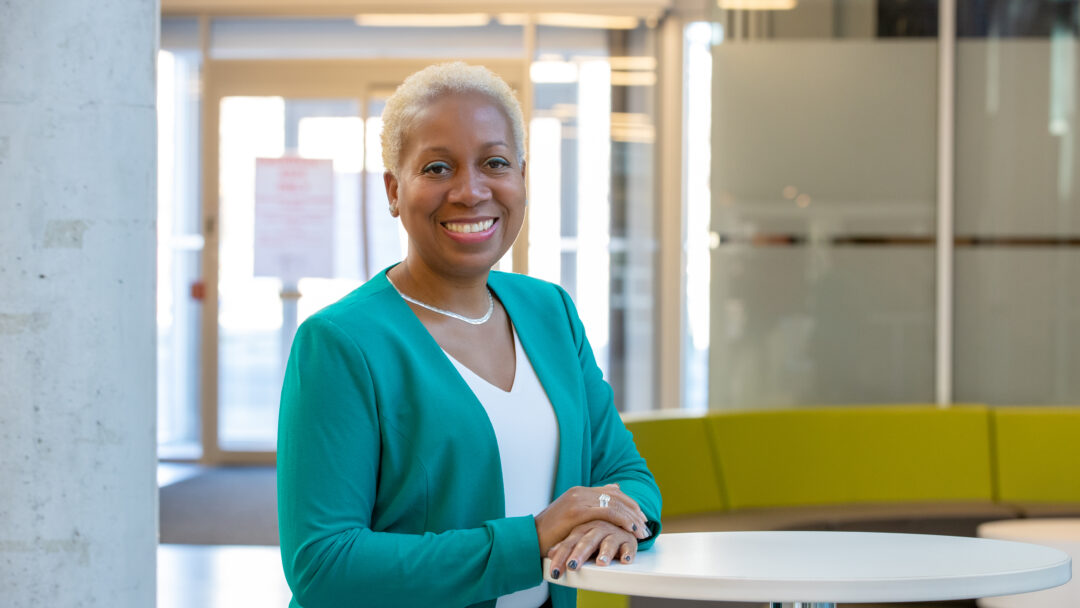
In laboratories where Black women were almost never present, Juliet Daniel was impossible to ignore. In lecture halls and faculty meetings, she spoke with the calm authority of someone who understood exactly why she was in the room. And in a field as clinical and codified as cancer biology, she did something defiantly radical: she named that gene she discovered after calypso music—Kaiso. A nod to her Barbadian heritage.
Juliet Michelle Daniel was born on September 19, 1964, in Barbados, to Lionel Daniel, a furniture maker, and June Daniel, a homemaker. She attended Queen’s College, then an all-girls school in Saint James, Barbados, before coming to Canada in 1983 to begin her undergraduate studies in Life Sciences at Queen’s University in Kingston, Ontario. She originally planned to study medicine afterward. Then came one devastation after another. A neighbour back home died of breast cancer; weeks later, her mother, June, was diagnosed with ovarian cancer. Six months after that, June was dead. Juliet crossed the graduation stage four days after the funeral. The grief rearranged everything. She had imagined becoming a physician. Instead, she turned toward research, trying to understand the disease that had hollowed out her world before she was old enough to make sense of it. “Cancer research chose me,” she would later say. “I’m not sure that I chose it.”
She completed her PhD in microbiology at the University of British Columbia—selecting Vancouver, she joked, because she’d heard it was Canada’s warmest city—before heading to Memphis for postdoctoral work at St Jude Children’s Research Hospital. The transition nearly broke her. “The first 10 days were a nightmare,” she later recalled. “I almost packed up and came back to Canada.” She remembered crying in a bank while trying to open an account. But she stayed. And because she stayed, she found Kaiso.
It was in Memphis in the late 1990s that Daniel isolated a previously unidentified gene involved in cancer progression. Her supervisor told her she could name it herself. Most scientists choose something technical, functional, and safe.
Daniel chose Kaiso — a word rooted in West Africa, most likely from the Efik phrase ka isu or the Ibibio kaa iso, meaning “go on,” “go forward.” Enslaved Africans carried it to the Caribbean, where it became the rhythmic precursor to calypso music. That it now lives in the cancer research literature, urging cells to account for themselves, feels less like a coincidence and more like something Daniel arranged on purpose.
In molecular biology, a transcription factor is a kind of cellular gatekeeper, a switch that determines which genes are activated inside a cell. Kaiso is one of them. Daniel’s work showed that when its expression runs too high, the consequences are severe: aggressive tumour growth, metastasis, and markedly poorer outcomes, particularly in Black women with triple-negative breast cancer. In mouse-model studies, removing Kaiso dramatically slowed tumour growth and prevented cancer from spreading to the lungs and liver. Her research helped illuminate something Black women had long experienced, but medicine had insufficiently explained: that health disparities are not accidents. They live in systems, in biology, in access, and in whose suffering gets studied seriously.
The lonely only
At McMaster University, where she arrived in 1999 as the institution’s first Black female scientist, she spent more than two decades as what she sometimes called “the lonely only.” The phrase sounded almost playful when she said it. But it wasn’t. It meant sitting in rooms where nobody looked like her; carrying the pressure of representation every single day; understanding that any mistake might be generalized to all Black women while excellence would still be treated as surprising.
Dr. Gary Warner, a Black professor who had been at McMaster for over three decades by the time Daniel arrived, remembers recognizing her predicament immediately. “I know that she saw me as a supportive and reassuring presence as she maneuvered the difficult early personal and professional challenges of settling into her academic career,” he says. The trust built between them in those early years, he adds, “remained unchanged to the end.”
Dr. Shaiya Robinson, now an assistant professor at McMaster and only the second Black female scientist hired by the Faculty of Science, first joined Daniel’s lab as a master’s student in 2009. “Being the only Black woman in STEM shaped everything about how she mentored,” Robinson says. Daniel demanded excellence. Sloppy labels, weak conclusions, and half-finished thinking did not survive her scrutiny, and students learned quickly that praise from her had to be earned.
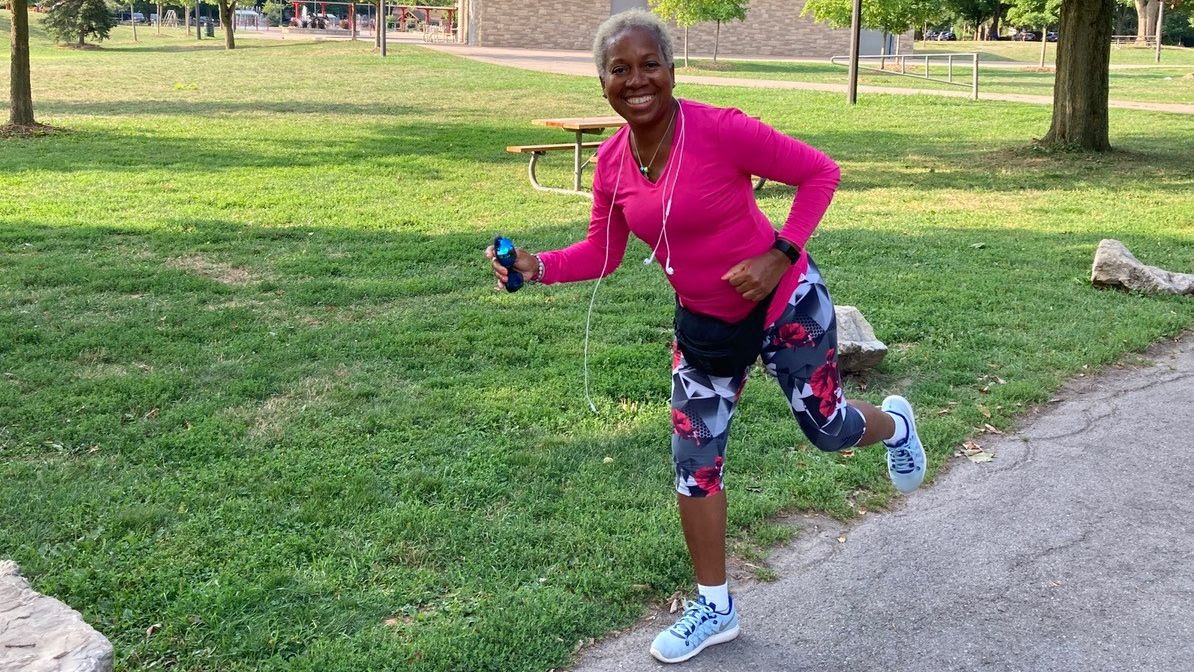
But they also remember the fruit she left outside the lab, the pears from her backyard tree, the late-night check-ins — was anyone sleeping? Eating? Keeping sane during the marathon experiments that stretched past midnight? Meena Alnajar, a former undergraduate thesis student, remembers Daniel insisting that even 20 minutes of climbing stairwells between experiments counted as exercise. Another former student, Lindyann Lessey, remembers arriving from Grenada utterly unprepared for a Canadian winter. “Dr. Daniel took me to the mall to buy proper winter boots,” she says. The gesture sounds small until you consider how often immigrant survival depends on exactly those acts of care.
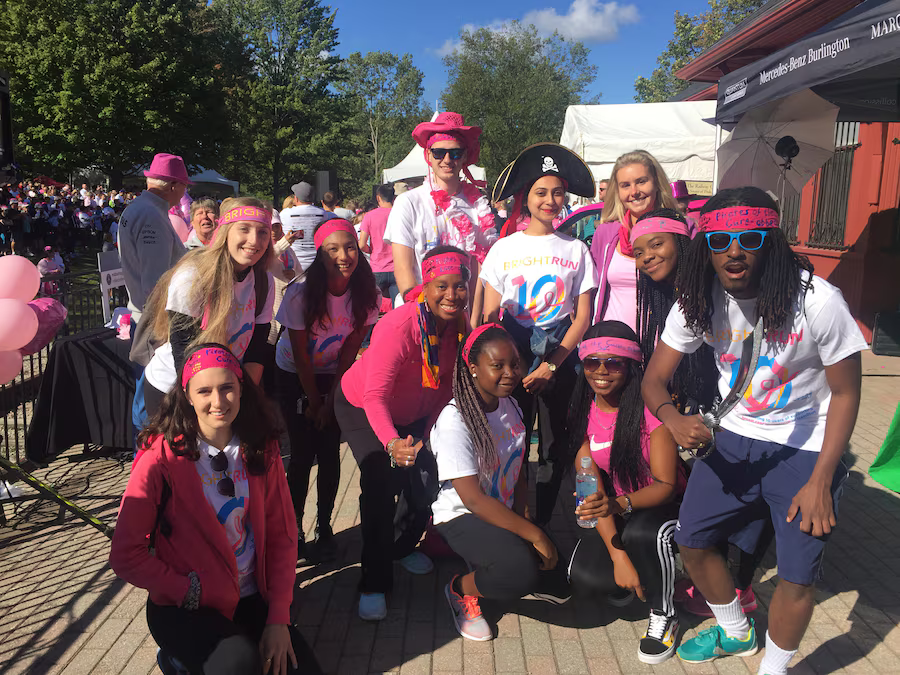
There were also themed lab photo shoots, cowboy costumes, and intentionally awkward 1980s-style “family portraits.” At the annual BRIGHT Run cancer fundraiser, her team called themselves the Pirates of the Cure-abbean — and over a decade of showing up rain or shine, Daniel and her team raised over $125,000 for the cause. “She took the science very seriously,” Robinson says. “But she was also very easy to love.”
 Supplied by McMaster University
 Supplied by BRIGHT Run
Building larger rooms
The loneliness Daniel experienced at McMaster eventually became fuel. She did not wait for institutions to change on their own. She built new ones.
Warner recalls the informal lunches among Black professors at McMaster in the early 2000s that first made the need plain. Out of those gatherings, with Daniel as a key figure, emerged the African Caribbean Faculty Association of McMaster (ACFAM). Its achievements would prove significant: a cohort-hiring initiative that brought nearly 30 Black faculty members to a university that for many years had one Black faculty member at most, if any, in any given Faculty; a new undergraduate African and African Diaspora Studies program; and Daniel’s role as a strategic adviser to the university president. When colleagues suggested asking for fewer positions in the cohort hire, Daniel reportedly pushed back immediately. Ask for as many as they’ll give, she said.
Mark Beckles, CEO of Palette Skills and a lifelong friend from Barbados, says, “There are people who talk and froth about things. And then there are people who put their hands to the plough and do. She was the second kind.” A scholarship in her name, he adds, would not be enough. “That’s too easy. I’m talking about something grander. A building, a research centre, something with the prominence befitting what she built.”
In 2006, following Toronto’s so-called “summer of the gun,” she co-founded the Canadian Multicultural LEAD Organization for Mentoring and Training alongside Mark’s wife, Wendy Beckles and three fellow Barbadians — educators Nicole Baxter and Cathy Joseph, and Kay McConney, now a minister in the Barbadian government — to support Black youth facing systemic barriers. In 2020, amid a global racial reckoning, she co-founded the Canadian Black Scientists Network and became a driving force behind McMaster’s Black Student Success Centre, launched in 2024.
The scale of that work is still becoming clear. On 20 May 2026, McMaster installed Dr. Nicholas Brathwaite as its first Black Chancellor. Brathwaite, born in Grenada, represents the crown on everything Daniel, Dr. Warner, Dr. Ibhawoh, and so many other Black colleagues spent decades building.
That work earned some of Canada’s highest scientific honours. Daniel was elected a fellow of the Canadian Academy of Health Sciences and received the Canadian Cancer Society’s Inclusive Excellence Prize. Her dedication to Barbados — where she collaborated with scientists and government officials, contributed breast cancer samples and clinical data, and helped establish an innovative laboratory to support public health and science innovation — earned her an honorary doctorate from the University of the West Indies. Her passing was acknowledged in a remembrance post by the Prime Minister of Barbados, Mia Mottley.
{https://www.instagram.com/p/DXsyAMkjdIC/?hl=en}
In November 2024, about a year and a half before her death, Beckles was among roughly a hundred people who travelled to Barbados for Daniel’s 60th birthday, guests who had flown in from Toronto, from across the Caribbean, and from the African continent. The party was dry, officially. It did not remain dry. A handful of guests, Beckles recalls, kept slipping off to the hotel bar and returning with drinks concealed well enough to pass unnoticed — until the dancing gave them away. “That,” he says, laughing, “is how we knew.”
Beckles says that what many there did not fully realize, however, was that Daniel already knew her cancer had returned. She barely spoke about it. Even in her final months, she remained in constant motion, writing grants from hospital beds, attending meetings from cancer wards, travelling abroad just weeks before her death, foot to the floor, doing things only she could do. “You would never have known,” Beckles says. “Her zest for life did not diminish. Not once.”
Warner, who visited her in the hospital in her final weeks, spoke of the same quality from a different angle. “The grief I experienced at the news of her death,” he says, “was mixed with thanksgiving for the exceptional life she had lived.”
Daniel died surrounded by people she had spent decades keeping close. She was predeceased by her parents, Lionel and June Daniel. She is survived by her brother Robert Daniel, his wife Nicole, and nephews Malachai, Matthew and Micah.
Biology, of course, does not fully explain family. Daniel built another one in Canada: students spanning generations, colleagues who became siblings, Christmas gatherings crowded with alumni returning year after year to celebrate the woman who had changed the direction of their lives. Stefan Mladjenovic, one of her former students, credits her mentorship and recommendation letters with helping him secure more than $300,000 in scholarship offers. “She believed in me in times when I didn’t believe in myself,” he says.
Kaiso still exists in scientific literature, thousands of citations deep, embedded permanently in cancer research. A Caribbean word in a global archive. Proof that Juliet Daniel was here.
—
A Celebration of Life will be held on 30 May 2026, beginning at 10:30 am, at Heartland Church. Reception to follow. In lieu of flowers, donations may be made to the Canadian Multicultural LEAD Organization for Mentoring and Training.