 By
By Before the conversation can continue, I’ve been given the task of explaining what it means to be Black and Nova Scotian.
What it means to be historically Black and Canadian.
What should be an ordinary exchange requires me to supply a history missing from someone else’s understanding of Canada. I’m angry at how comfortably that ignorance persists, and at how much is expected of us in explaining ourselves while so little is expected of others in learning about us.
It’s especially lonely to find myself making that explanation among other Black people, where a shared racial identity can create the impression that we already know one another. I can be recognized as Black and included in the name “Black Canadian” while the history and culture that make me African Nova Scotian remain largely unknown.
Making a home in Canada means entering a Black history already in progress, with communities, institutions, and struggles that deserve to be understood. African and Caribbean Canadians have a responsibility to learn about those histories as part of understanding the country they call home. If Black Canada is a shared identity, the work of understanding it must be shared as well.
When contemporary African and Caribbean experiences centred in Toronto and Montreal are treated as the whole story, historic Black communities across the country become exceptions requiring explanation. Blackness begins to appear primarily urban and recently arrived. People whose families have lived for generations in smaller towns, rural settlements and coastal communities must interrupt that account to establish where they fit. Our own family’s arrival tells us when we entered a history; it gives us no reason to treat earlier communities as peripheral to it.
The institutional failure is well established. Canadian Heritage’s own account of Black History Month acknowledges how extensively Black communities’ role in shaping Canada has been ignored, citing limited recognition of Black Loyalists, military service, and enslavement here. We inherit those omissions through our education and public culture, then carry them into conversations with one another. Shared Blackness doesn’t automatically correct what we were never taught.
Even an acknowledgment that Black people have been here for centuries can leave the substance of those centuries untouched. A date of arrival is allowed to stand in for everything that followed: the families people raised, the institutions they established, and the decisions through which they made a life.
At Buxton, in southwestern Ontario, people who had escaped slavery established farms, businesses, churches and schools. By 1859, a decade after its founding, the settlement had three integrated schools. Remembering the Underground Railroad chiefly as a journey ending in Canadian “freedom” leaves those lives scarcely begun. Crossing the border was followed by the work of educating children, earning livelihoods, and sustaining a community.
In the same decade, Mary Ann Shadd was publishing the abolitionist newspaper The Provincial Freeman in Toronto. Her work belongs within the history of Canadian journalism, just as Buxton belongs within the history of Canadian education. When such contributions are confined to occasional recognition, the familiar account of how the country developed remains largely undisturbed. We can celebrate Black history without allowing it to change what we understand Canadian history to be.
The omissions also determine whom we imagine in the landscape. Black families from Oklahoma and surrounding states established farming communities in Alberta and Saskatchewan in the early twentieth century, including Amber Valley and the settlement near Maidstone. Black migrants from California began arriving on the Pacific coast in 1858 and made homes in Victoria, Saanich and Salt Spring Island. A Prairie homestead or a coastal neighbourhood should not become difficult to imagine as Black because our knowledge has stopped at the places most familiar to us.
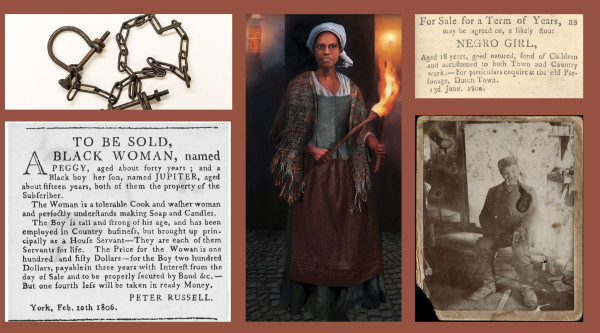
Following these histories also complicates Canada’s reputation as a refuge. In seventeenth-century New France, the African child later known as Olivier Le Jeune lived in slavery. In the Maritimes, Black Loyalists who arrived after the American Revolution faced unequal treatment and broken promises of land. Nearly 1,200 left for Sierra Leone in 1792, helping establish Freetown. Their departure belongs within the history of Black “freedom” here, with consequences extending far beyond Canada.
Jamaican Maroons, forcibly exiled to Nova Scotia in 1796, followed them to Sierra Leone in 1800 after repeatedly petitioning to leave. Their journeys connect Caribbean resistance, British colonial power, and African settlement through people pursuing control over their lives. Black Canadian history is world history. Our unfamiliarity with it can leave parts of the African, Caribbean and American histories we claim as our own unexamined.
These histories unfolded on Indigenous homelands, within colonial systems that determined whose claims to land would be recognized. Understanding Black settlement requires attention to those relationships, including the ones that complicate a comforting account of freedom.
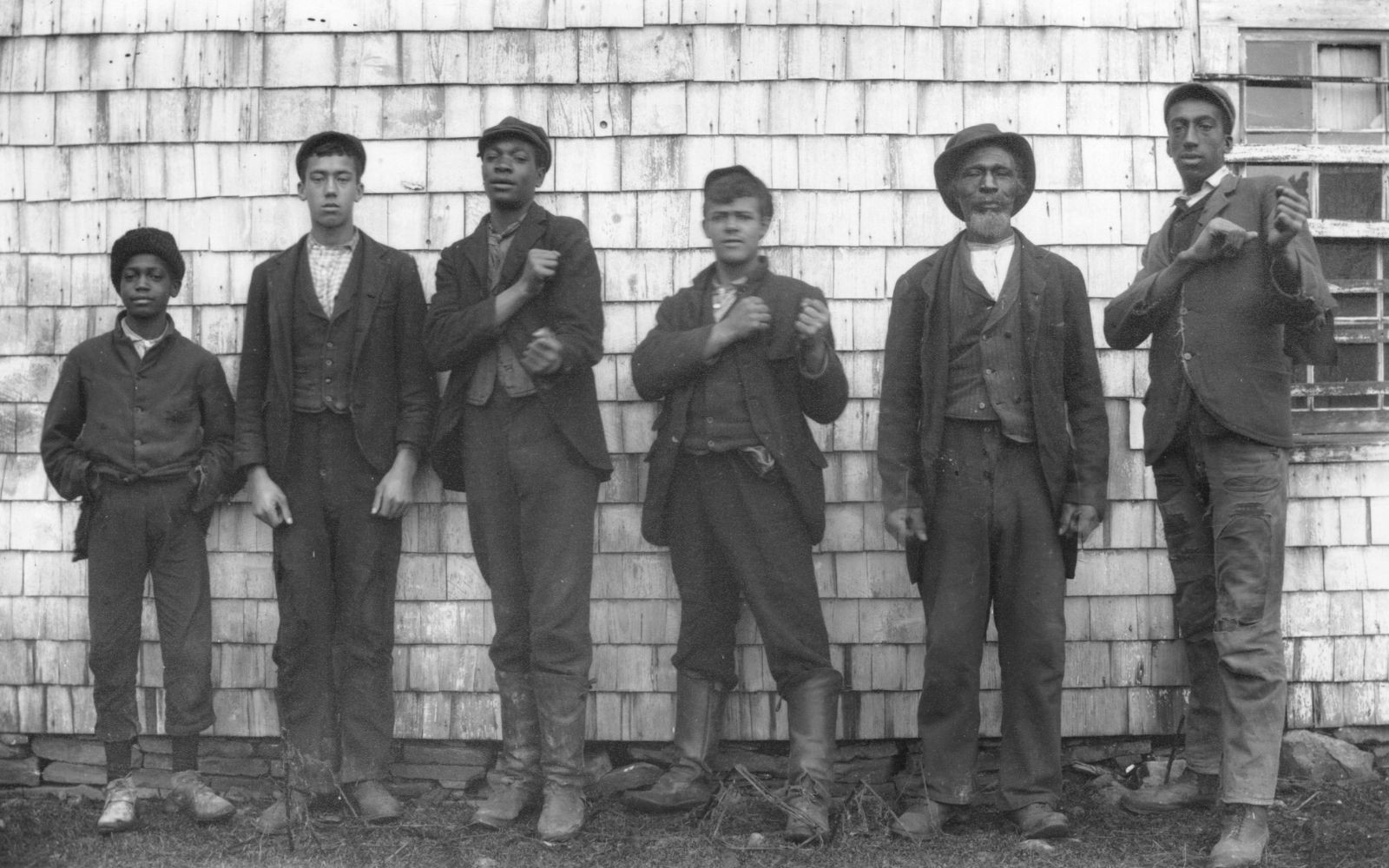
As a legacy archivist, I know that a community can spend generations preserving a history that remains unfamiliar beyond it. Families identify faces in photographs, keep correspondence, record testimony and remember who lived on particular streets. In tracing my connections to Truro, New Glasgow and Guysborough, Nova Scotia, through family records, church communities, Black hockey and military service, I’m working within that continuing effort to account for lives. Someone else’s first encounter with the history may come after decades of labour to keep it available.
That labour deserves an audience willing to do some work of its own. Historic Black communities can’t remain responsible for preserving their histories, teaching them and persuading other Black people that those histories concern them. A shared identity requires the effort of understanding it to be shared as well.
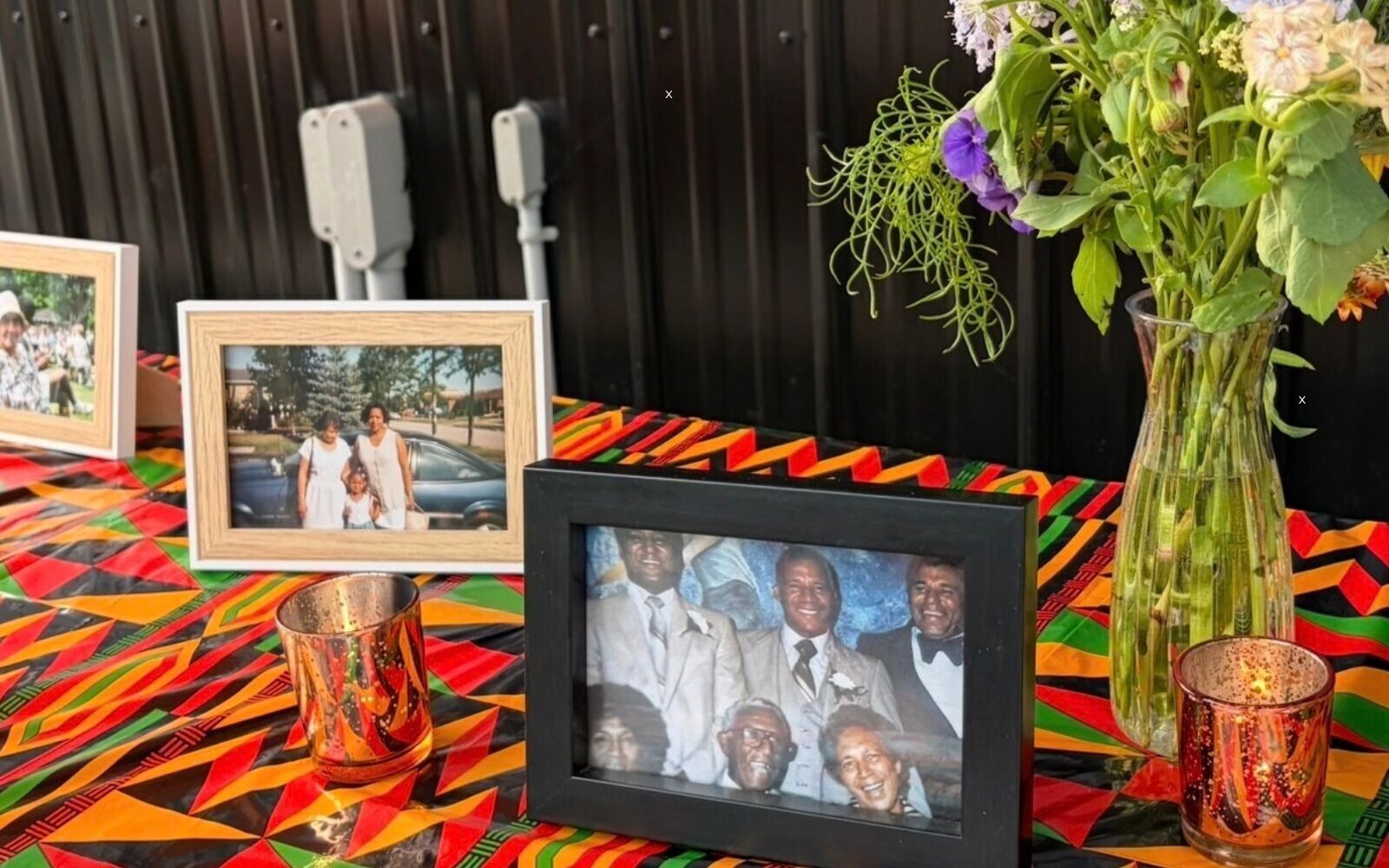 A collection of family photos belonging to myself and René Boudreau, displayed during our retreat.
This August, I brought Black travellers to Nova Scotia through Bring the Black Folks to Nova Scotia, alongside co-host René Boudreau of Elevate and Explore Black Nova Scotia. We based ourselves in Truro, where both our families have roots. I wanted people to learn from African Nova Scotians and become interested in the lives they were building, with enough time together for that interest to develop beyond an introduction.
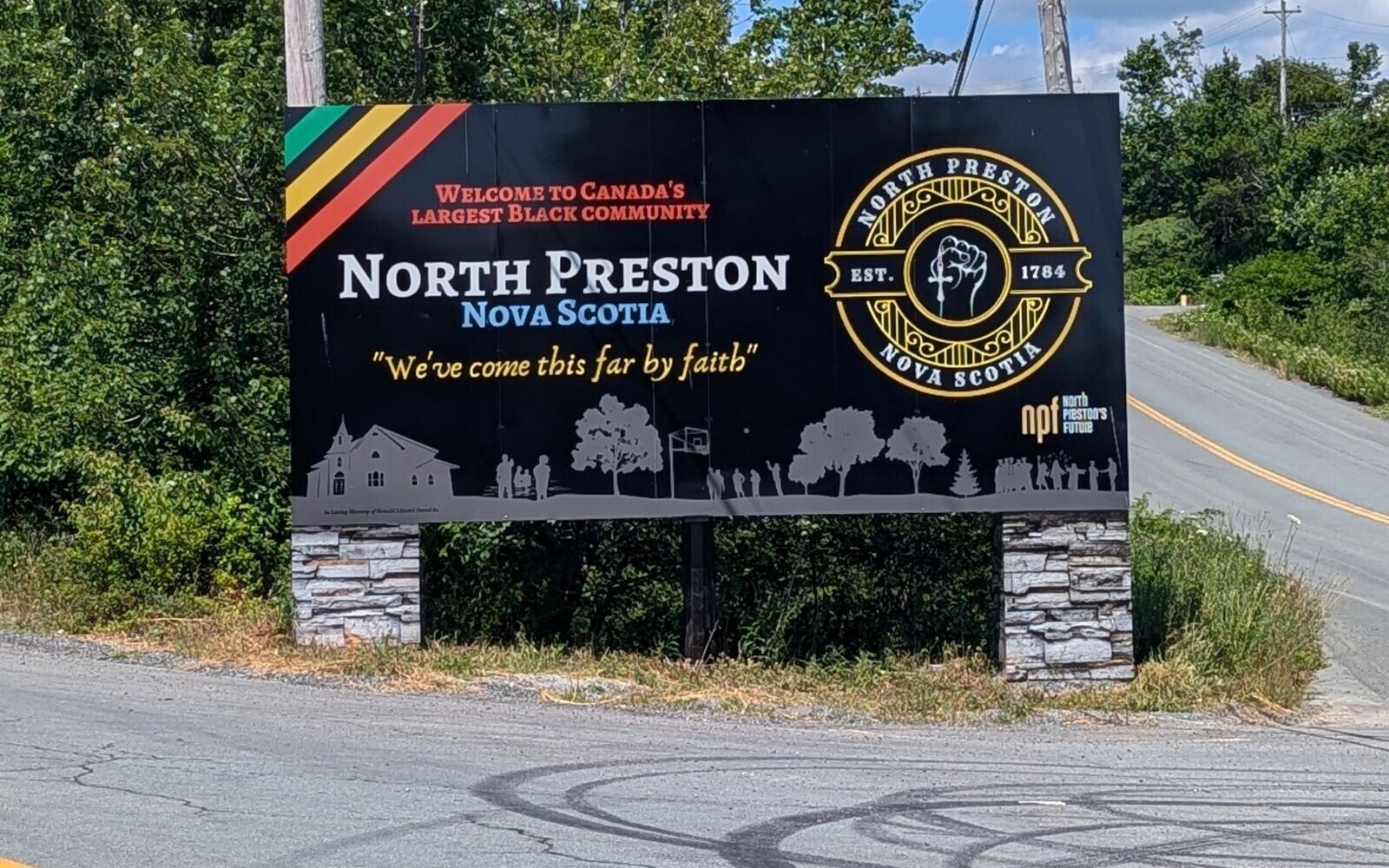
At Africville, we learned about the community residents had made alongside the history of their displacement. At the Black Cultural Centre for Nova Scotia, artists, educators and community advocates connected historical inheritance to their work in music, theatre, education and land. Their concerns were contemporary. Describing a community as “historic” must leave room for the people deciding what its future will be.
Our children inherit the consequences of how much we learn about one another. A Black child studying Canada deserves to encounter Black people across its centuries and regions, with lives substantial enough to understand beyond a name and an achievement. Children from historic Black communities deserve to recognize something of the world they know at home in the country they are taught about. Children whose families arrived more recently deserve to know the histories into which their own lives are unfolding.
Schools have a responsibility to teach this. Adults have a responsibility to continue learning it. “We didn’t learn it in school” explains where a gap began; it can’t indefinitely explain why it remains. Once we recognize the inadequacy of our education, we have a choice about whether its omissions will become the limits of what we pass on. Our children should receive something more useful than an explanation of why we never knew.
I owe that effort to histories beyond my own ancestry. My family’s nine generations give me knowledge to share and questions I’m still pursuing. I expect the same willingness to learn from people who speak of Black Canada as a community to which we all belong.
For the descendants of historic Black communities, recognition should mean that someone has taken the trouble to know us. The people standing beside us should understand something of the histories through which we came to be standing there.
I should be able to tell you who I am without first having to explain that my people exist.