 By
By The fear lives somewhere between memory and anticipation, surfacing whenever a young person disappears, whenever a neighbourhood begins speaking in lowered voices, or whenever I open my phone and see the name of a place where I once worked beside the word "shooting". It’s the fear that somebody I loved, mentored, advocated for, fed, laughed with, fought for, or watched grow up will become public property before the people who knew them have had space to speak to who they were.
A few days after the shooting at Salsa on St. Clair, I opened Facebook and found a message from a young woman I had worked with more than a decade ago. She told me that one of the young men who had been killed was Cesar.
My Cesar. Our Cesar. The little boy I met when he was seven years old.
I was twenty then, completing a placement with the Toronto District School Board at Carleton Village Junior and Senior Public School while pursuing my bachelor’s degree in criminal justice; though the work I was doing stretched far beyond what anyone would reasonably expect of a student.
I didn’t yet possess the language I would later use to describe anti-Blackness, institutional harm, surveillance, narrative power, criminalization, or the ways adults begin deciding who Black children are before those children have had enough time to understand themselves. I only knew that there was a little boy in front of me named Cesar. And he deserved adults who were unwilling to disappear, grow tired, or accept the system’s difficulties as a reasonable excuse for giving up on him.
Cesar changed the trajectory of my life because he was the first child I ever went to war for systemically. Before him, I understood care as something primarily relational: listening, encouraging, feeding, comforting, redirecting, and making sure a child knew there was at least one adult in the room who genuinely enjoyed who they were.
Cesar taught me that care without confrontation can become another form of adult self-congratulation. It’s easy to describe ourselves as supportive while remaining agreeable to the people and institutions withholding the support a child actually needs. Advocacy begins when loving a Black child requires us to become inconvenient to adults who have already decided that the child is the inconvenience.
He was one of my first “I’ll flip every table in here” kids.
My later education, experience in criminal justice, and community advocacy gave me more precise language for what I first recognized intuitively at twenty: institutions don’t merely observe Black children. They assemble narratives about them.
A behaviour is documented while its context is treated as irrelevant. An adult’s interpretation acquires the authority of fact. A child’s reaction becomes evidence of character, while the conditions producing that reaction are excluded from the record. Once enough fragments have been collected, punishment can be presented as an objective response to a problem the institution helped define, reproduce, and preserve.
I watched white educators send seven-year-old Cesar into the hallway for an hour and continue imagining themselves as the reasonable adults in the story. They put him in detention for weeks, punished his behaviour without asking whether he had eaten that morning, and discussed him in staff rooms as though his future had already been settled. Their credentials, “concern,” and whiteness gave them the confidence to confuse their perception of Cesar with the truth about him.
Working within the education system was one of the first places I learned the difference between seeing a Black child and building a case against one.
Surveillance watches closely to confirm what adults already believe. It collects infractions, records tone, remembers “defiance,” isolates mistakes, and creates a version of the child strong enough to make every future punishment appear inevitable. Support also pays attention, but it’s organized around curiosity rather than suspicion. It asks what happened before the behaviour, what need is being communicated without the language adults find acceptable, what conditions have been mistaken for character, and what responsibility belongs to the institution before responsibility is assigned entirely to the child.
This is one of the ways criminalization begins long before a Black child encounters the criminal legal system. It can begin with the removal from class, the thickening file, the repeated detention, the lowered expectation, the adult conversation he’s not present to correct, and the story that follows him from one room to another until every new authority figure believes they’re responding to who he is rather than inheriting somebody else’s conclusion.
By the time handcuffs, police statements, courtrooms, or headlines enter the story, the public often treats criminalization as a sudden response to individual conduct rather than a relationship institutions have been rehearsing with the child for years.
Cesar taught me to interrupt that rehearsal.
Over the years, I would see him around the neighbourhood from time to time. It was always “Hey, Miss V,” followed by some version of saying, “YOU DON’T EVER AGE?” It didn’t matter how much time had passed. He could return me immediately to Carleton Village, to Pelham Park, to those young people, and to the twenty-year-old version of myself who was still discovering what this work would demand of her life.
Those children became part of my why. That community became part of my why. Cesar became part of my why. The path I took after meeting him is inseparable from what loving and advocating for him taught me.
My career has been built around language, memory, identity, story, and the consequences of allowing institutions to hold authorship over people they have never tried to know fully. Cesar helped me understand the urgency of that work before I knew it would become the centre of every crevice of my life.
What Cesar also taught me, and what the next twenty years would repeatedly confirm, is that being meaningfully loved and supported by good people doesn’t make a Black child immune to the institutions surrounding them. A committed adult can interrupt harm, challenge the story being built, create access where none existed, and become one reliable place for a child to return to when the rest of the world has made them feel disposable.
Even several committed adults, working together, remain limited by the fact that they’re still operating inside systems with far more authority, reach, and permission to define that child than any one relationship can hold.
They can’t be present in every room where somebody is deciding what a child’s behaviour means or whether that child will be understood as vulnerable, “at-risk,” or threatening. They also can’t individually undo the conditions that make survival harder, particularly when institutional suspicion follows a child from one environment to the next. You can surround a Black child with people who care deeply and still be asking those people to fight structures designed to outlast their energy.
There’s a comforting belief that access to one good adult or one meaningful resource should be enough to redirect an entire life. When it isn’t, people begin asking what went wrong, as though support functions as immunity and care should be able to cancel every condition operating around a child. That question also treats resilience as though it’s proof of effort, discipline, or worthiness. Some young people adapt to instability in ways adults recognize and reward. Others become guarded, distrustful, emotionally detached, hyperalert, or unwilling to continue cooperating with adults who have repeatedly mistaken control for care.
None of these responses measures how badly a child wants a future, or if they deserve one. What I know through experience is that human beings don’t absorb repeated harm identically, and no amount of encouragement can guarantee that a young person will emerge from hostile conditions in the form society finds easiest to celebrate.
The larger problem is that there’s still no meaningful, widely practised institutional understanding of Black children. Too many of the people employed to work with them understand Black childhood primarily through the language of behaviour, risk, intervention, and compliance. They struggle to recognize when what they call defiance is self-protection, when disengagement is accumulated disappointment, or when distrust is an informed response to adults who have repeatedly proven unsafe. Many are ill-equipped to work with Black children, and some shouldn’t be doing so at all. Good intentions don’t become competence because someone has received a credential or secured a position.
When ignorance is paired with institutional authority, it becomes a professional conclusion about the child rather than an examination of the adult who failed to understand them.
We also have to be honest about who holds much of that authority. Black children are still being interpreted and managed by non-Black adults operating inside institutions organized around white standards of innocence, safety, family, communication, and acceptable childhood behaviour. People often say these systems weren’t built with us in mind, but they surely were. Their policies may not have been designed for our care, but their mechanisms have always known how to contain, discipline, exclude, and criminalize us.
We aren’t fighting a vague concept called “the system.” We’re fighting actual people whose discomfort is treated as evidence, whose cultural ignorance is protected as neutrality, and whose perception of a Black child can become an official record before that child has any meaningful opportunity to correct it. We’re fighting institutions capable of turning racial interpretation into material consequence.
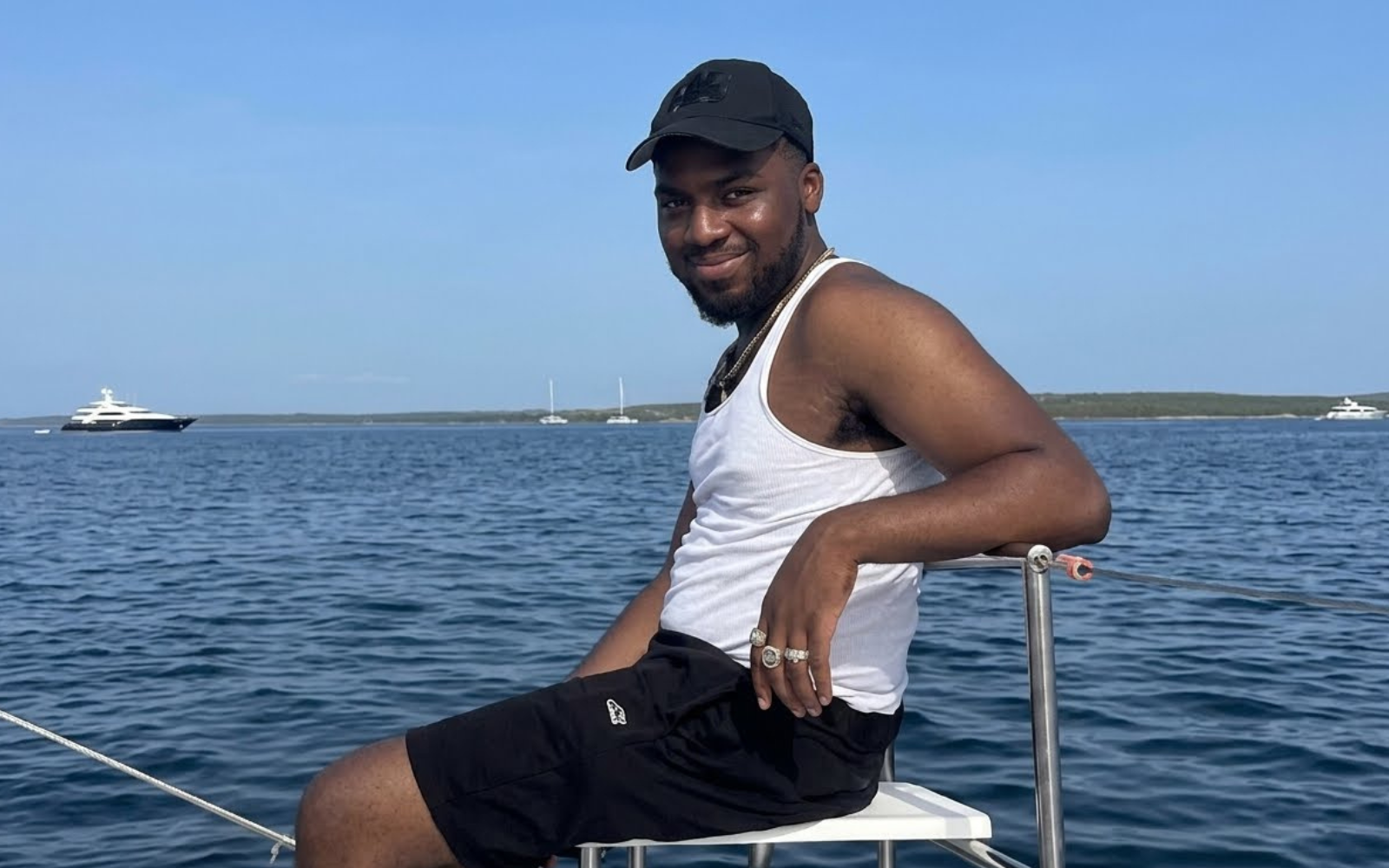 Cesar Vernaza was 20 years old when he was killed.
None of this is an explanation of Cesar’s life, nor is it an invitation to speculate about what he experienced beyond what I know and have chosen to share. It’s what years in advocacy and education taught me about the limits of individual intervention. That work was among the most fulfilling periods of my life because I had the privilege of knowing extraordinary children and young people before institutions reduced them to incidents, files, outcomes, and risk assessments. It was also the most exhausting because so much of my labour involved helping Black children survive environments that remained unwilling to examine what made survival necessary. I spent years challenging decisions, repairing preventable harm, and translating children to adults who should already have known how to understand them, while individual care was repeatedly overshadowed by institutional limits.
Eventually, I had to accept that one committed person can matter immeasurably. Several committed people can change what becomes possible. But even their combined commitment has limits when the conditions surrounding a child remain unchanged.
Care can interrupt harm, create possibility, and ensure that a child isn’t alone inside what’s happening to them, but it can’t promise a particular outcome. The public often treats the outcome as evidence of whether the care worked, whether the young person used what was available to them, or whether they were ever deserving of the effort in the first place.
We rarely account for everything a young person had to survive between the intervention and the moment we later use to define them. Instead, once a Black life ends violently, people begin reading the entire life backward from the death, treating its final circumstances as an explanation for everything that came before.
That’s the danger now: many people will encounter Cesar only through the circumstances of his death. Police have described the shooting as a targeted exchange between people who knew one another, and some of you will treat that description as permission to withdraw your compassion. You will speculate about gangs, criminality, associations, and choices. You will ask why you should care about this young man.
That reaction is the problem.
A police statement can describe the present understanding of an incident; it can’t, however, contain the life of the person who died. Even the most complete case file remains an arrangement of legally relevant facts rather than a full account of somebody’s humanity. Criminal justice requires questions about conduct, evidence, responsibility, and consequence. Community requires us to remember that none of those inquiries transform a person into the worst allegation, decision, association, or moment attached to their name.
Compassion doesn’t require the fabrication of innocence, but it sure does require the refusal to make innocence the admission price for grief.
I’m not asking anyone to erase complexity, romanticize choices, or pretend that every decision Cesar made was beyond examination. I’m asking why Black people are still expected to achieve moral perfection before our deaths are permitted to mean anything. A person can make choices we don’t understand and still have been loved through and through. A young man can have lived through circumstances we can’t fully account for and still be somebody’s son, friend, relative, neighbour, memory, and reason to keep going. A family shouldn’t have to conduct a public defence of their loved one’s entire life before strangers agree that losing him is devastating.
We become intensely interested in personal responsibility after a Black child dies. But we remain dangerously uninterested in collective responsibility while he’s alive.
Everybody becomes skilled at tracing causation once there is no longer a life left to protect.
The community lesson can’t begin and end with telling Black young people to make better choices. It must also ask whether we’ve built communities, schools, programs, institutions, and systems where meaningful choices are supported by belonging, dignity, safety, language, opportunity, and people who remain present after the child becomes ‘difficult to manage’. It must ask whether we intervene early enough—before the suspension, before the file grows thick, before the child stops expecting adults to be useful, and before his most complicated moment becomes the only evidence the public is willing to consider.
Cesar changed my life before either of us was old enough to understand that he was doing it. His presence gave direction to work I would spend the next two decades learning how to name. His death has returned me to the earliest promise I made in this career: that I wouldn’t remain agreeable while institutions reduced Black children to their hardest moments and called it truth.
It was one of the greatest honours of my life to know him, love him, advocate for him, and watch him grow. It was an honour to be Miss V, and I will keep flipping every table necessary to ensure that Black children are known as children while they’re still here to experience what our care can make possible.